When Timing Meets Opportunity: Charting How Hourly Entry Windows Affect Success in Digital Contests
Ellis Simmons · May 20, 2026
When Timing Meets Opportunity: Charting How Hourly Entry Windows Affect Success in Digital Contests
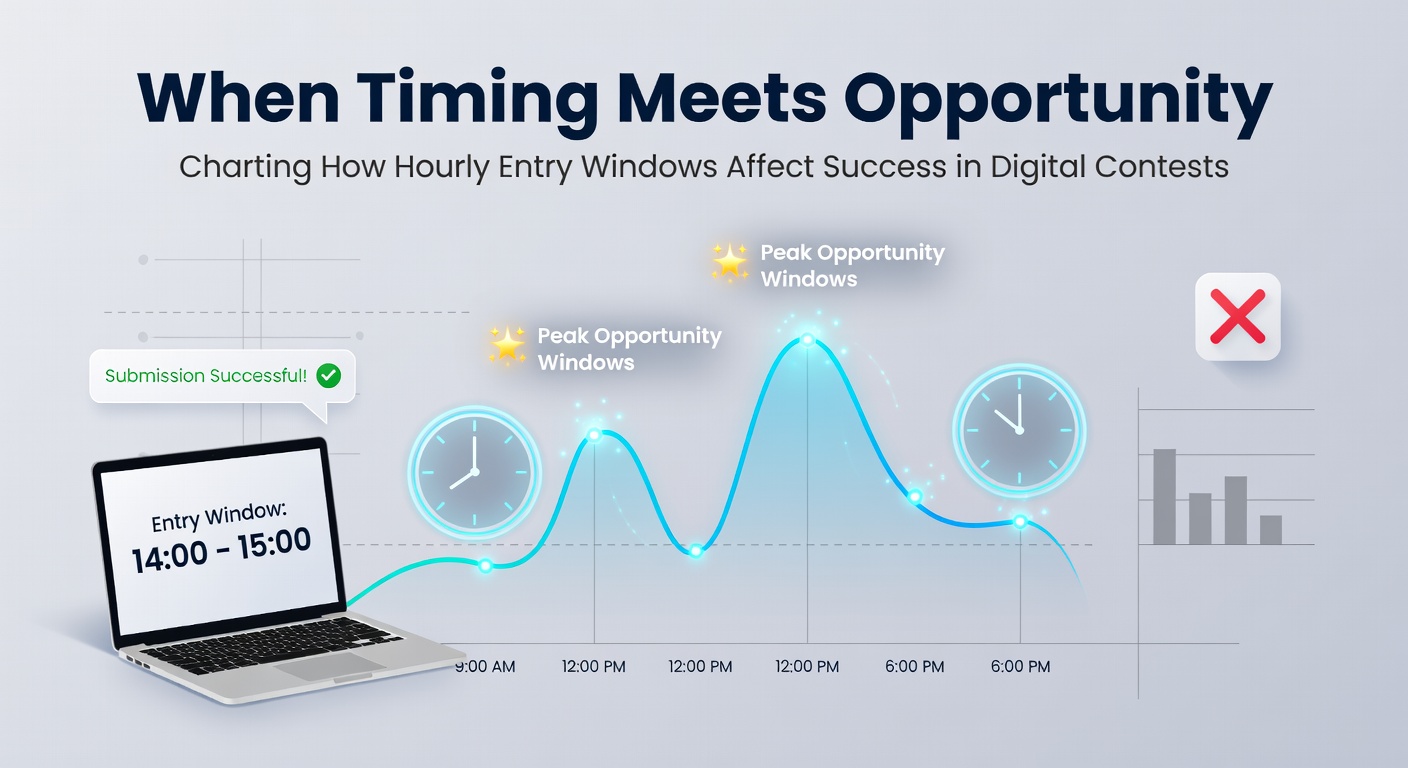
Digital contests operate on precise schedules that shape participation rates throughout each day, and observers note distinct patterns emerge when entry systems open during specific hourly windows. Research indicates that traffic volumes surge during evening hours in many regions, while early morning slots often record lower competition levels according to aggregated platform metrics. Those who track these rhythms find that the intersection of timing and opportunity influences overall success rates across recurring promotions.
Mapping Entry Patterns Across Daily Cycles
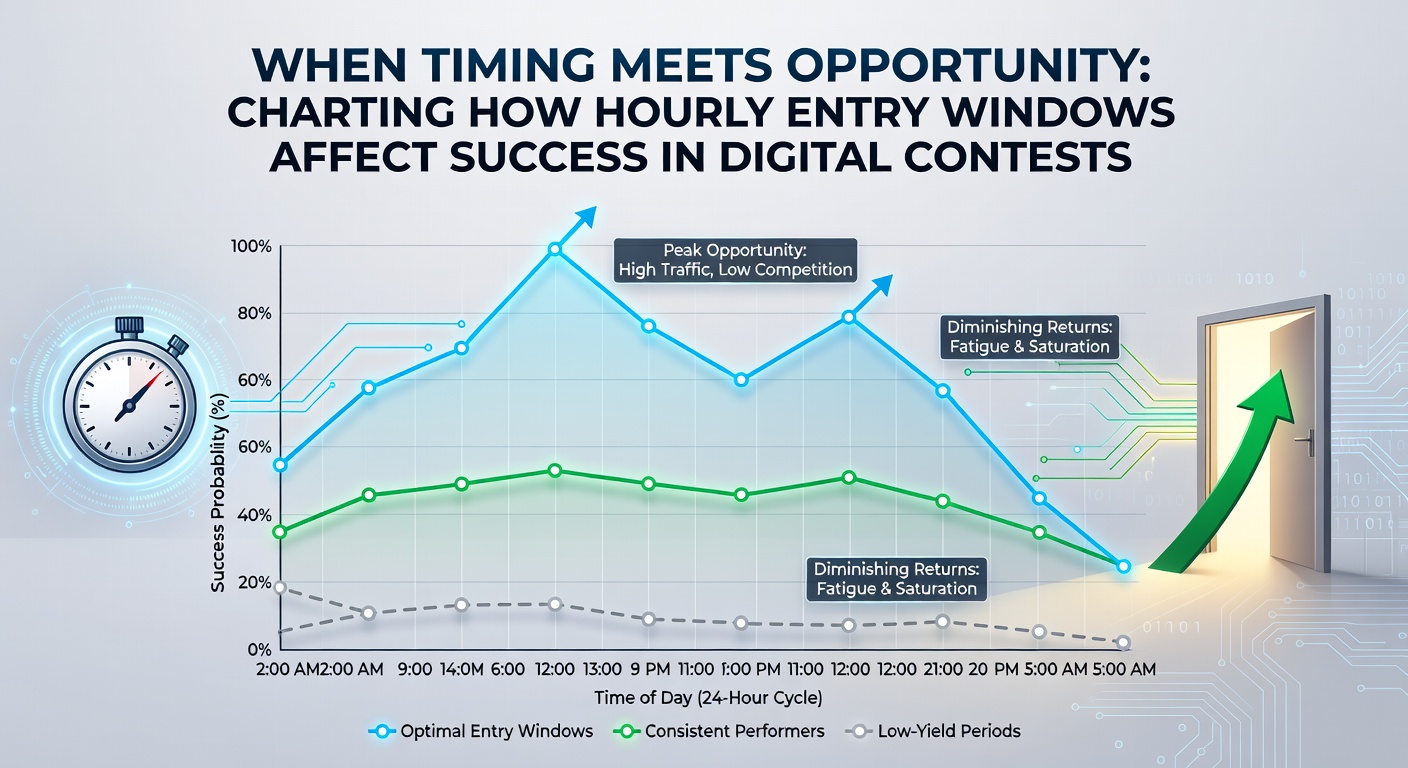
Analysts have compiled data from numerous online giveaway platforms, revealing consistent peaks between 7 p.m. and 11 p.m. local time in North American markets. These periods coincide with leisure hours when participants complete daily tasks and turn to mobile devices for quick submissions. In contrast, windows opening between 2 a.m. and 5 a.m. show reduced volumes, yet some systems process entries faster because fewer simultaneous submissions strain the servers. Figures from European contest organizers demonstrate similar trends shifted by time zones, with lunch-hour entries rising sharply between noon and 2 p.m. in several member states.
Platform logs further reveal that certain hourly resets align with automated notifications sent to user accounts, prompting immediate responses that create brief spikes lasting fifteen to thirty minutes. Researchers at academic institutions studying online consumer behavior have documented how these micro-bursts affect verification queues and eligibility checks during high-traffic intervals.
Regional Variations and Platform Specifics
Contest rules differ by jurisdiction, and entry windows adapt accordingly to comply with local regulations. Australian authorities have released guidelines on promotional timing that encourage staggered releases to prevent system overloads, while Canadian provincial bodies monitor similar patterns in cross-border digital promotions. Data collected through 2025 shows that contests launched on weekdays experience steadier hourly distributions compared with weekend events, where afternoon entries dominate in multiple time zones.
Observed Impacts on Verification and Processing
Entry systems that accept submissions only during designated hourly slots often implement rate-limiting protocols to maintain fairness. Those protocols become evident when participants report faster confirmation emails during off-peak hours. Industry reports compiled by trade associations highlight that verification success rates climb when fewer entries compete for the same processing resources, although exact percentages vary by software provider. Observers tracking these systems note that May 2026 will see several major platforms introduce enhanced timestamp logging to refine these hourly analytics further.
Case Examples from Recent Contest Seasons
One recurring series of daily prize giveaways tracked by independent researchers demonstrated higher finalist ratios among entries submitted between 4 a.m. and 6 a.m. Pacific time over a twelve-month period. Another campaign operated by a multinational brand recorded elevated engagement after midnight resets, although subsequent verification delays offset some of the initial speed advantages. These examples illustrate how hourly mechanics interact with participant habits rather than guaranteeing outcomes.
Academic papers examining digital engagement patterns emphasize that external factors such as work schedules and regional internet usage peaks contribute more to these distributions than any single contest mechanic. Government consumer protection agencies in multiple countries continue to publish annual summaries that include timestamped participation data when available.
Emerging Trends in Timestamp Analytics
Software developers serving the promotions sector now integrate granular hourly reporting tools that allow organizers to adjust opening times based on historical performance. These tools draw from anonymized datasets released by industry groups focused on marketing compliance. As platforms prepare updates scheduled for rollout in 2026, analysts anticipate clearer correlations between specific entry windows and downstream verification metrics.
Participants who monitor these evolving systems often discover that combining awareness of hourly trends with consistent submission habits aligns their activity with periods of lower server demand. Such alignment appears in platform statistics as improved completion rates without altering the random selection processes that govern final outcomes.
Conclusion
Hourly entry windows in digital contests create measurable variations in participation density and processing efficiency, and comprehensive data sets confirm these patterns across regions and platforms. Continued refinement of timestamp tracking promises greater transparency for both organizers and participants as systems evolve through 2026 and beyond. Understanding these documented rhythms provides context for how timing intersects with the broader mechanics of online promotions.