Seasonal Cultural Events and Their Ripple Effects on Submission Patterns in Recurring Digital Reward Platforms
Ellis Simmons · Jul 8, 2026
Seasonal Cultural Events and Their Ripple Effects on Submission Patterns in Recurring Digital Reward Platforms
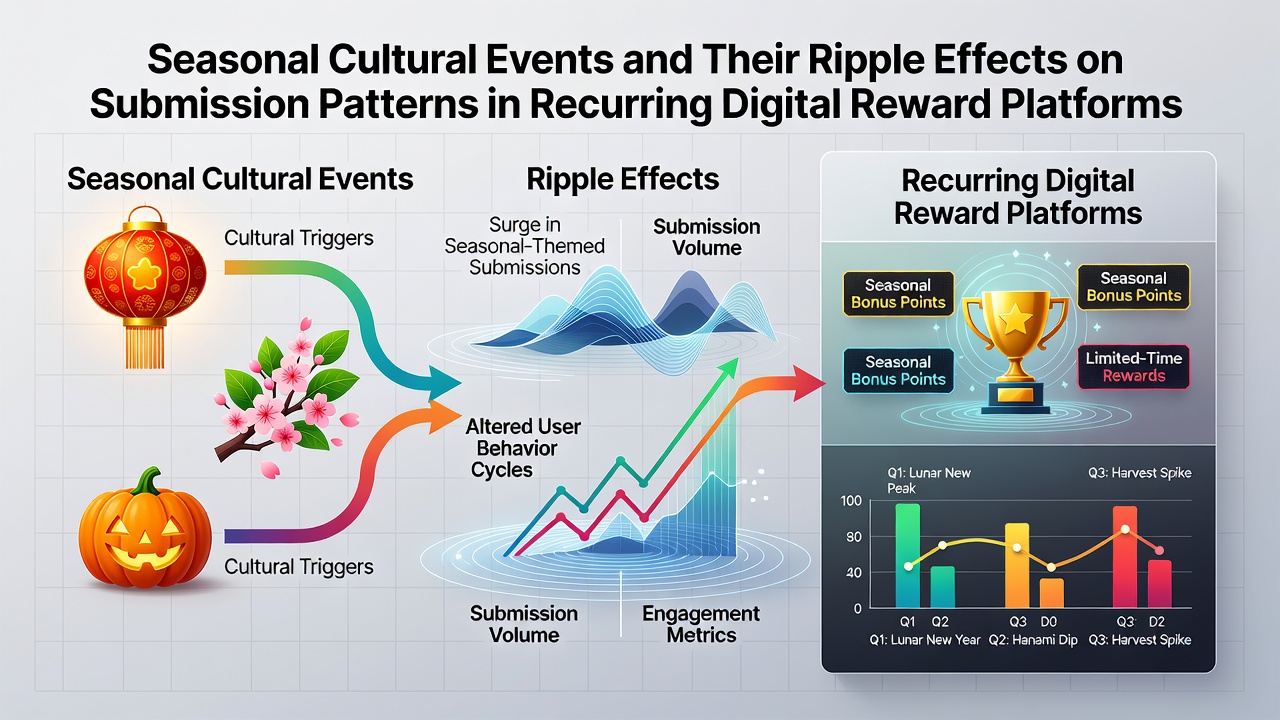
Seasonal cultural events create measurable shifts in how users interact with recurring digital reward platforms, where daily or periodic entries determine prize eligibility. These platforms track submission volumes, timing, and frequency across user bases, and researchers have documented consistent patterns tied to holidays, festivals, and regional observances. Data collected from multiple systems shows that submission rates often rise in the days leading up to major events while changing in character during the events themselves.
Winter Holiday Periods and Entry Volume Changes
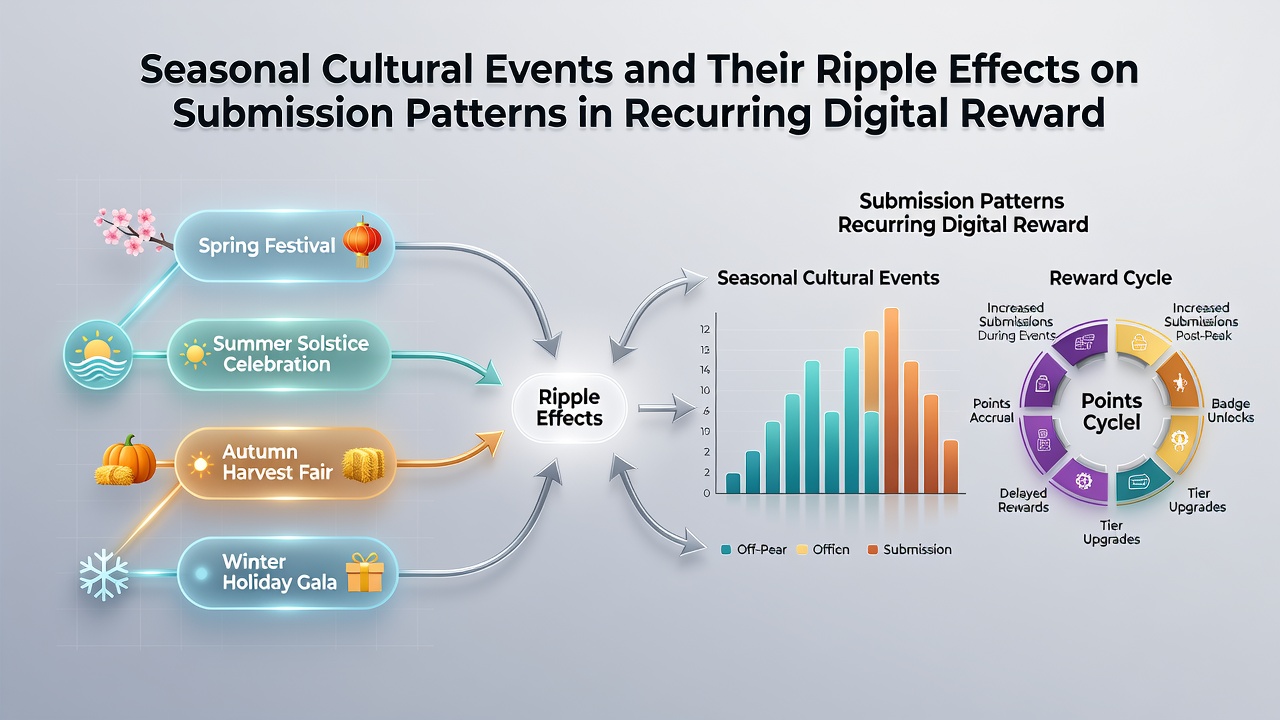
December observances such as Christmas and Hanukkah coincide with increased logins and form submissions on many platforms, according to aggregated analytics from reward program operators. Users frequently complete entries in batches during evening hours when family gatherings occur, which alters the usual daytime distribution seen in non-holiday months. Platform logs indicate that mobile submissions grow relative to desktop entries because participants access apps while traveling or during breaks from work schedules. Similar patterns appear around Lunar New Year in East Asian markets, where extended family time correlates with higher evening and weekend activity.
Spring and Summer Festivals Reshape Timing
Events like Easter, Cinco de Mayo, and various regional spring festivals prompt earlier daily submissions as participants adjust routines around school breaks and outdoor activities. In July 2026, platforms serving North American users are expected to see comparable adjustments around Independence Day celebrations, with entry windows opening earlier in the day to accommodate parade viewing and evening fireworks schedules. Studies from academic research groups have tracked these timing shifts across multiple years, noting that participants in Australia and Canada exhibit parallel changes during their respective summer observances such as Australia Day or Canada Day. The result is a temporary flattening of the typical submission curve that stretches across more hours rather than concentrating in narrow peaks.
Platform Responses to Cultural Event Patterns
Operators adjust server capacity and notification schedules in anticipation of these fluctuations because submission spikes can strain validation systems during high-traffic periods. One industry report from a European research consortium highlighted how platforms serving EU markets modified reminder cadences ahead of Diwali and Eid celebrations to maintain steady entry flows. Those adjustments reduced duplicate submissions by staggering alerts across time zones, a technique that has since been adopted more widely. Users in affected regions often complete additional entry steps tied to cultural themes, such as sharing event-related photos or completing short quizzes, which further diversifies the data collected by verification layers.
Cross-Regional Variations in User Behavior
Geographic differences appear clearly when comparing submission data across continents. Participants in Latin American countries show pronounced increases during Carnival periods, whereas those in South Asian markets demonstrate steadier but elevated activity around harvest festivals. Government statistical agencies in Canada have published consumer engagement summaries that align with these observations, showing how reward platform activity intersects with broader retail and entertainment spending patterns during cultural peaks. The combined datasets reveal that platforms with global user bases must maintain flexible compliance protocols because eligibility verification volumes rise unevenly across regions at different times of year.
Longer-Term Effects on Platform Metrics
Recurring patterns allow operators to refine algorithms that predict entry volumes weeks in advance. Historical records demonstrate that post-event lulls occur as participants shift focus back to regular schedules, creating predictable dips that affect leaderboard calculations and prize distribution planning. Research papers from university economics departments have modeled these cycles using anonymized platform data, confirming that the ripple effects extend beyond immediate volume changes to influence retention rates in the following weeks. Those models help explain why some platforms introduce themed entry bonuses timed to cultural calendars, although the underlying submission mechanics remain consistent year-round.
Conclusion
Seasonal cultural events produce documented, recurring impacts on submission patterns within digital reward platforms through changes in volume, timing, and device preferences. Observers tracking these systems across multiple years note that the effects vary by region and event type yet follow repeatable structures that platforms can anticipate. Continued analysis of these interactions supports ongoing refinements in validation processes and user interface design without altering core eligibility rules.