Question Format Variations Shape Response Precision in Digital Prize Entry Systems
Ulrich Long · Aug 1, 2026

Question Format Variations Shape Response Precision in Digital Prize Entry Systems
Digital ballots in prize competitions present participants with structured questions that range from multiple-choice selections to open-text fields, and these variations directly affect how accurately responses get recorded while also determining whether submissions pass automated validation checks. Observers note that formats requiring precise inputs such as date selections or numeric entries create different error patterns compared to simple yes-no options, and platforms track these differences through completion logs and rejection rates. Research indicates that dropdown menus reduce spelling errors yet sometimes limit response options when lists fail to include common variations in participant data.
Common Question Structures Used in Entry Forms
Multiple-choice grids appear frequently in sweepstakes entry pages because they allow quick selections across several criteria like age ranges or preferred prize categories, and data shows these grids achieve higher completion rates when options stay limited to five or fewer choices. Text fields for name verification or address confirmation demand exact formatting that validation scripts check against postal databases, while radio buttons enforce single selections that prevent contradictory answers from reaching the processing stage. Researchers discovered that sliders for rating preferences introduce numeric precision issues when participants drag past intended values, leading to validation failures that require resubmission steps.
Accuracy Patterns Across Format Types
Studies from academic institutions reveal that participants provide more consistent answers when questions use consistent labeling and avoid double negatives, and error rates drop noticeably when formats include inline examples of acceptable responses. Data from entry platforms in August 2026 indicated that open-ended questions about contest rules produced higher rates of incomplete fields compared to pre-populated checkboxes, prompting organizers to adjust layouts mid-campaign. Those who analyzed submission logs found that combined formats, such as a multiple-choice followed by an optional explanation box, increased validation success when the secondary field remained optional rather than mandatory.
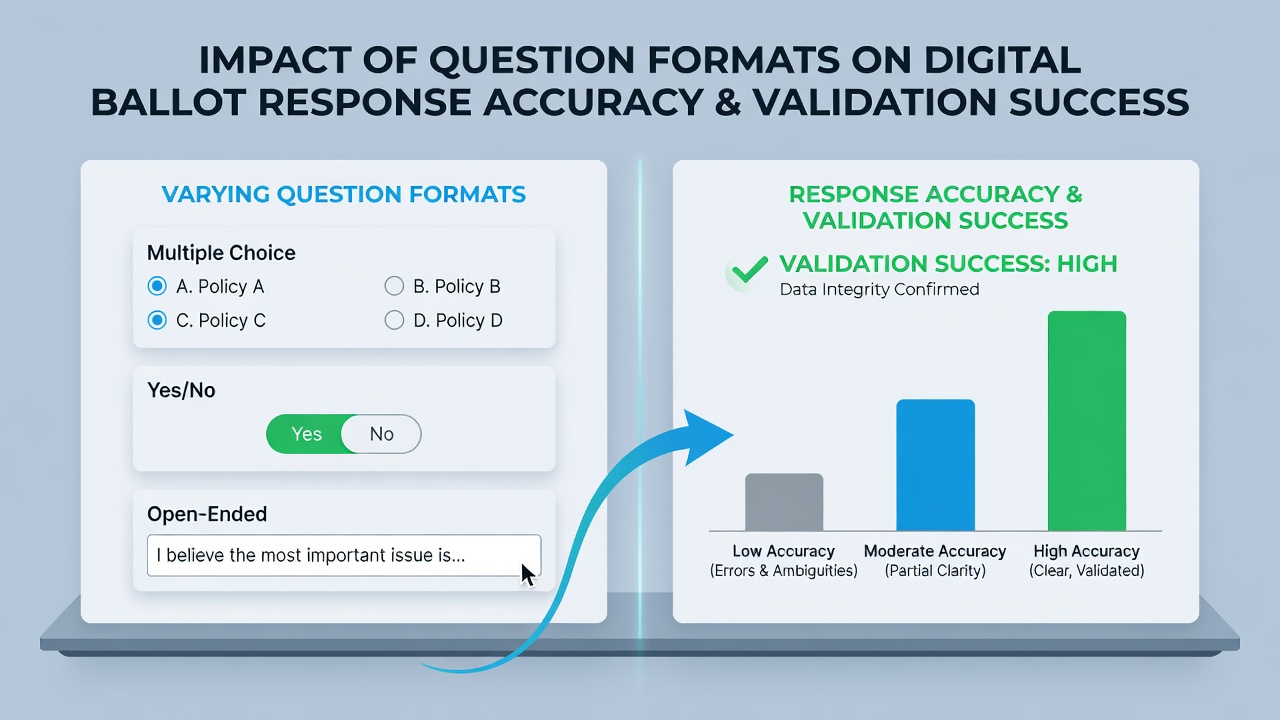
Validation success depends on how well the chosen format aligns with backend rules that scan for completeness, format compliance, and logical consistency, and platforms using real-time feedback messages see fewer final rejections when users correct issues before submission. According to Statistics Canada survey methodology reports, structured formats with built-in constraints produce cleaner datasets that process faster during winner selection phases. People managing large-scale digital contests report that formats requiring copy-pasted confirmation codes from emails reduce duplicate entries because the validation layer cross-checks against sent messages.
Regional Data on Format Performance
Reports compiled by the Australian Bureau of Statistics highlight how question sequencing influences response quality in online collection tools, and similar patterns emerge in prize competition entries where early simple questions build momentum before complex verification sections appear. European Commission digital services analyses show that mobile-optimized formats with touch-friendly buttons achieve higher accuracy on smartphones than desktop versions using the same questions, and entry systems adapted these findings by summer 2026 to accommodate rising mobile participation. Observers tracking recurring contests note that formats incorporating progress indicators maintain engagement levels that translate into fewer abandoned submissions and stronger validation outcomes overall.
Adjustments in Response to Submission Trends
Organizers review aggregated validation data quarterly to refine question phrasing and format choices, and adjustments such as converting free-text fields to standardized date pickers have lowered rejection counts in several documented campaigns. Research indicates that A/B testing different layouts before full rollout helps identify which formats minimize common input mistakes like mismatched zip codes or incomplete phone numbers. Those reviewing platform metrics in August 2026 observed that hybrid approaches combining automated suggestions with manual override options balanced accuracy gains against user flexibility without introducing new validation bottlenecks.
Conclusion
Question formats on digital ballots continue to evolve as competition platforms integrate feedback from validation systems and participant behavior logs, and these refinements support higher response accuracy across diverse entry methods. Data from multiple regions demonstrates that careful format selection improves both participant experience and downstream processing efficiency in prize competitions. Continued monitoring of submission patterns allows organizers to maintain reliable validation success rates as digital entry volumes grow.