Push Notification Cadences and Their Correlation with Entry Volume Spikes in Mobile Prize Events
Greta Coleman · Jun 10, 2026
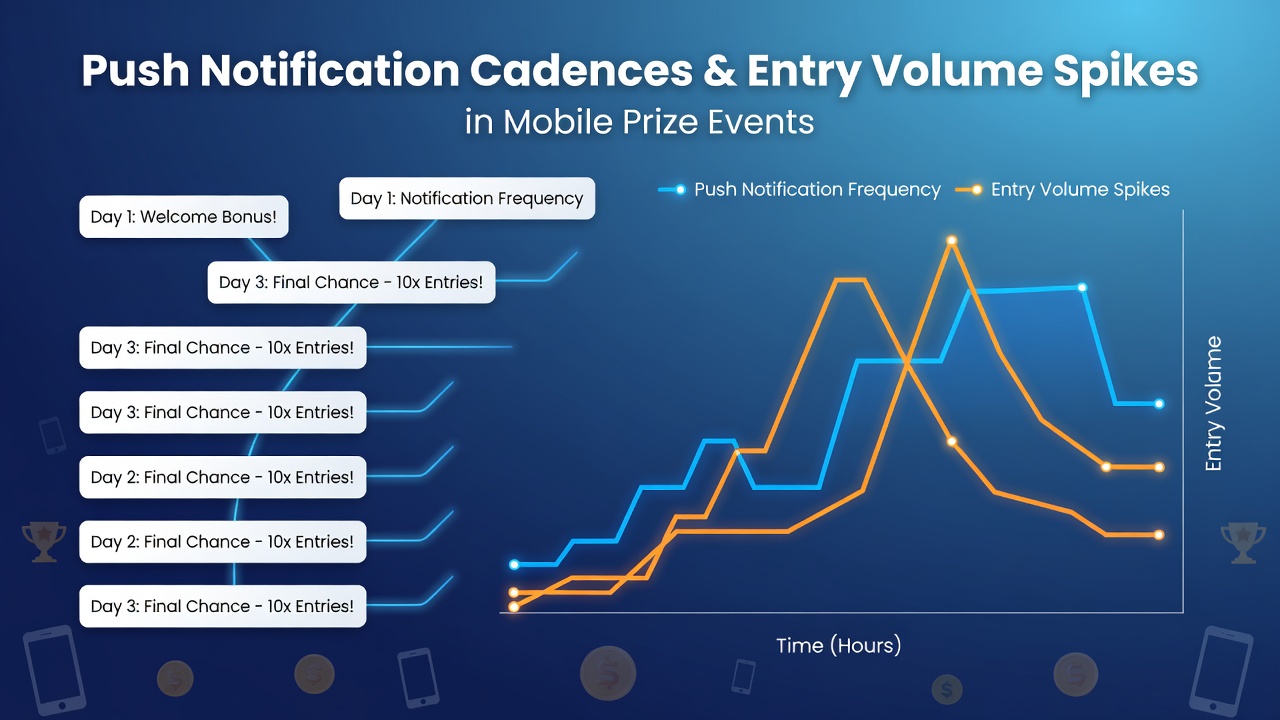
Push Notification Cadences and Their Correlation with Entry Volume Spikes in Mobile Prize Events
Push notification systems in mobile prize events operate through scheduled sequences that balance frequency with user engagement thresholds, and researchers have tracked how these sequences align with measurable increases in entry submissions across various platforms. Data from multiple campaigns shows that cadences incorporating initial alerts followed by spaced reminders produce distinct volume patterns rather than uniform distribution throughout an event window.
Defining Cadence Structures in Mobile Reward Systems
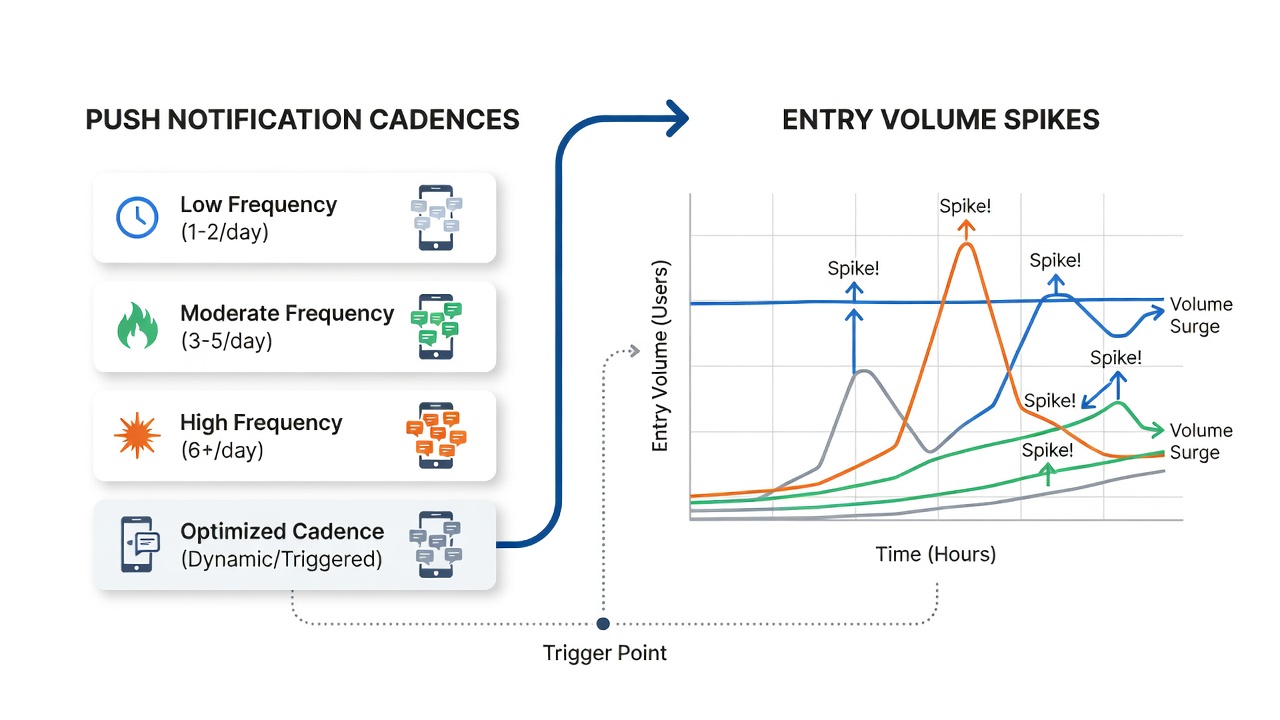
Mobile prize platforms deploy notification sequences that include trigger-based messages at event launch, mid-cycle prompts after periods of inactivity, and final-hour alerts as deadlines approach. Studies from academic institutions indicate these patterns correlate with entry clusters that form within 15 to 45 minutes after message delivery, particularly when the notifications reference remaining time or new prize additions. Observers note that events using three-message sequences over 48-hour periods often record higher aggregate submissions compared to single-blast approaches, though results vary by user segment and device type.
Entry Volume Patterns and Timing Correlations
Analysis of submission logs reveals that spikes frequently coincide with notifications sent during evening hours in the participant's local timezone, where open rates climb and subsequent entries follow within narrow windows. In June 2026, aggregated platform metrics highlighted repeated surges between 7 PM and 10 PM local time across North American and European user bases, with volume increases ranging from 180 to 320 percent above baseline hourly averages. These patterns hold across daily and weekly contest formats, while weekend cadences show slightly broader distribution windows that extend into mid-morning periods.
Measurement Approaches Across Different Markets
Researchers apply timestamp correlation techniques to separate notification-driven entries from organic submissions by matching device identifiers and session starts to message delivery logs. Government sources such as the Federal Trade Commission guidelines on mobile marketing emphasize transparent timing disclosures, which in turn affect how participants respond to repeated prompts. Industry reports compiled by research groups in Australia and Canada further document that notification intervals shorter than four hours tend to produce diminishing returns after the second message in a sequence.
Segment-Specific Response Data
Participant groups segmented by prior engagement levels demonstrate varied reactions to cadence adjustments, with new entrants responding more strongly to launch notifications while returning users show elevated activity after reminder messages. Figures from platform operators reveal that users who have completed at least one prior entry within the same event cycle generate follow-up submissions at rates approximately 2.4 times higher than first-time participants when notifications reference their existing progress. These differences appear consistently across prize categories that include cash, merchandise, and travel rewards.
Platform Variations and Technical Factors
Operating system differences influence delivery reliability and subsequent volume responses, as iOS devices exhibit tighter delivery windows compared to Android environments where background restrictions can delay receipt. European data protection frameworks require explicit consent mechanisms that affect initial opt-in rates, which in turn shape the baseline population available for cadence testing. Observers tracking multi-platform campaigns note that unified delivery systems produce more synchronized spikes than fragmented approaches that rely on separate regional servers.
Conclusion
Correlation patterns between push notification cadences and entry volume spikes continue to emerge from large-scale mobile prize event data, with timing, frequency, and segmentation serving as primary variables that shape submission clusters. Platform operators and researchers maintain ongoing measurement protocols to refine these sequences, while regulatory frameworks across regions establish boundaries on message frequency and disclosure requirements. The documented relationships provide measurable benchmarks that inform future campaign structuring without guaranteeing uniform outcomes across all participant pools.