Navigating Eligibility Verification Layers in Multi-Platform Reward Campaigns
Greta Coleman · Jun 8, 2026
Navigating Eligibility Verification Layers in Multi-Platform Reward Campaigns
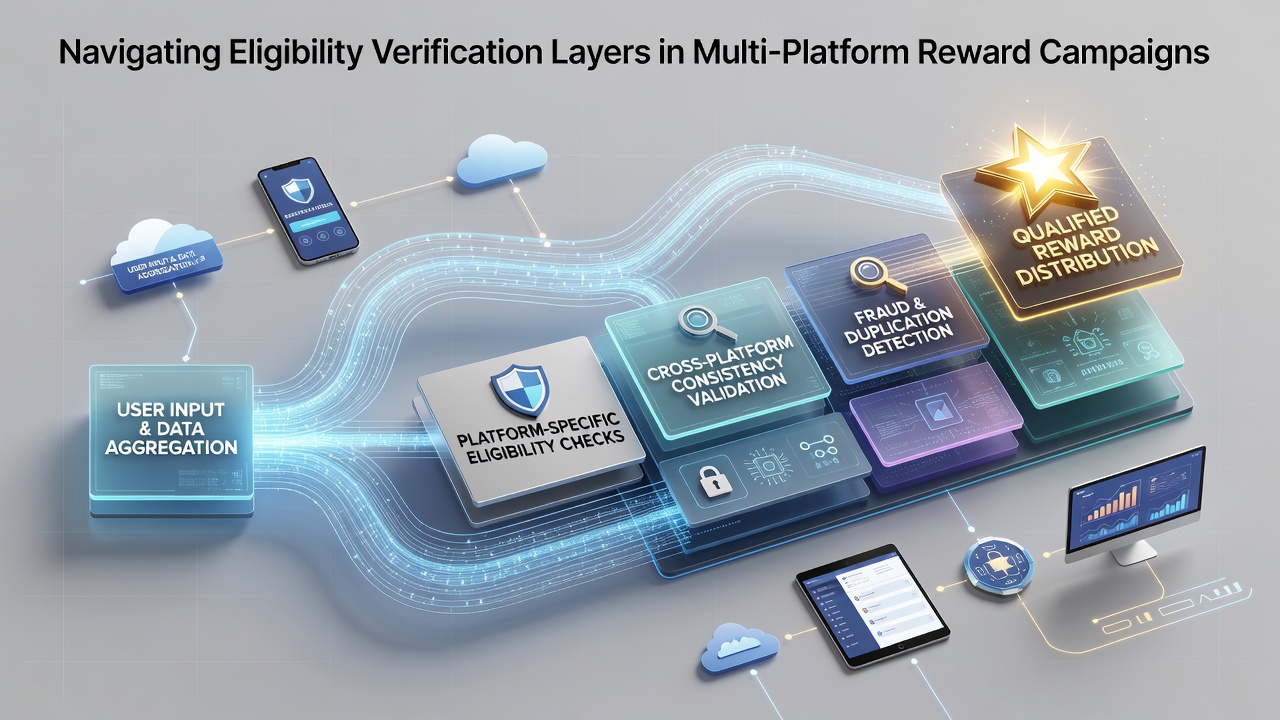
Multi-platform reward campaigns operate across websites, mobile applications, and social media channels where eligibility verification occurs through sequential layers that confirm participant status before any prize distribution takes place. These layers combine automated checks with manual reviews, and they adapt as new platforms enter the mix or regulations shift.
Core Components of Verification Systems
Initial account creation requires submission of basic details such as name, email address, and date of birth, yet subsequent layers add device fingerprinting, IP address mapping, and cross-referencing against previous entries. Data indicates that campaigns running simultaneously on web and app interfaces often deploy unified databases so that a submission blocked on one channel triggers immediate flags on others. According to the Federal Trade Commission guidelines on promotions, these steps help maintain compliance with federal standards for fair prize distribution.
Geographic eligibility follows as the next layer, and it relies on both declared addresses and real-time location signals from GPS or network data. Campaigns frequently apply geo-fencing technology that restricts access in certain states or countries where local laws prohibit particular reward structures. In June 2026 several operators updated their mapping protocols to align with revised territorial rules that affected participant pools in border regions.
Platform-Specific Adaptations
Each participating platform introduces unique verification requirements that campaigns must integrate without creating redundant friction for users. Social media integrations, for instance, pull profile data and activity history while mobile apps enforce additional steps such as phone number confirmation or biometric authentication. Research from industry reports shows that unified APIs reduce duplication rates by linking submissions across these environments in real time.
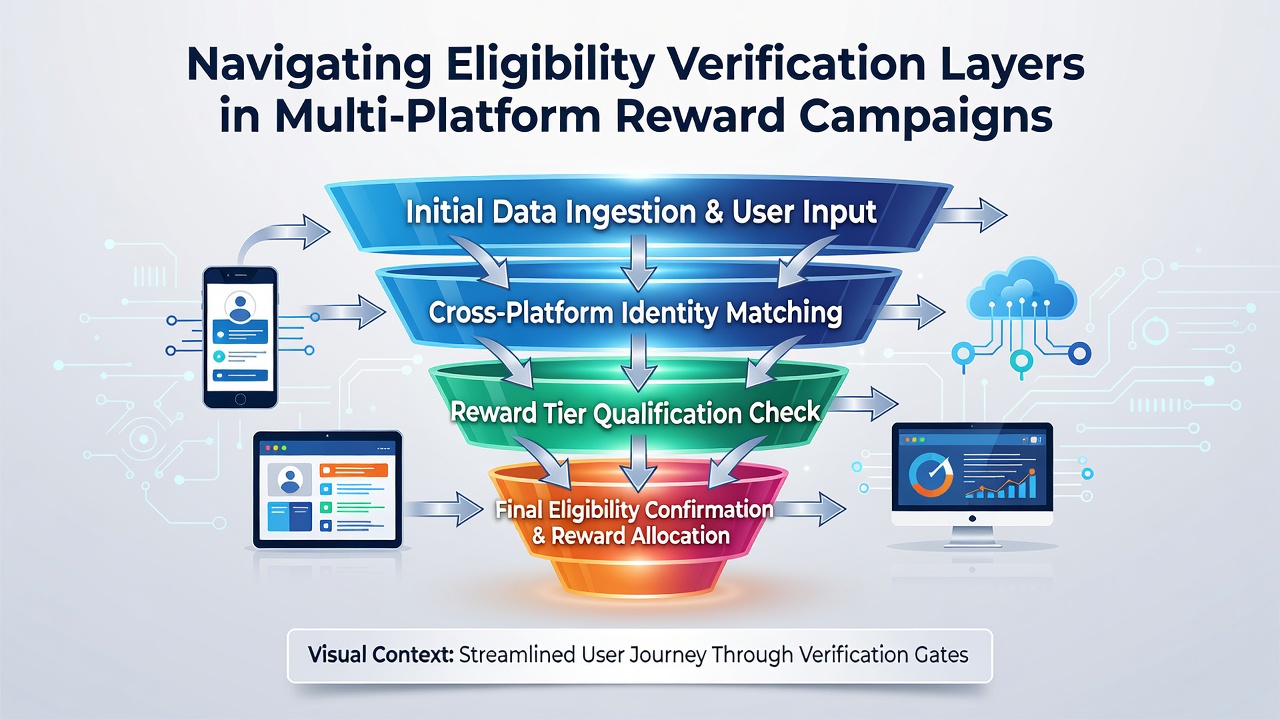
Identity confirmation deepens at higher tiers through document uploads or third-party services that validate government-issued identification. Observers note that campaigns handling larger prize values tend to insert these steps earlier in the process, whereas lower-tier rewards may defer them until winner selection. This tiered approach balances security needs with participation volume.
Handling Duplicate and Fraudulent Entries
Duplicate detection operates through algorithmic comparison of entry patterns, device identifiers, and behavioral signals collected during the submission sequence. When anomalies appear, such as rapid successive entries from the same network segment, systems route those cases for manual review or automatic disqualification. A study conducted by academic researchers at the University of Melbourne highlighted how cross-platform data sharing lowered duplicate submission rates in coordinated reward events.
Campaign operators also maintain exclusion lists that incorporate prior winners, banned accounts, and addresses flagged for policy violations. These lists update continuously and sync across all active platforms so that an exclusion applied in one environment immediately blocks access elsewhere. The Competition Bureau of Canada has documented similar practices in its oversight of national promotional campaigns, emphasizing transparent communication of eligibility rules to participants.
Regulatory Alignment Across Jurisdictions
Multi-platform campaigns must reconcile differing legal frameworks that govern age minimums, residency requirements, and tax reporting obligations. Verification layers therefore include conditional logic that applies jurisdiction-specific filters based on detected location or declared residence. When a participant crosses into a new regulatory zone, the system may prompt additional confirmations or redirect to an alternative entry path.
Automated reporting tools compile verification outcomes for regulatory submissions, and these records often include timestamps, platform sources, and outcome codes for each attempted entry. Such documentation supports audits and demonstrates adherence to applicable statutes without requiring separate record-keeping for each channel.
Conclusion
Eligibility verification in multi-platform reward campaigns functions as an interconnected series of checks that evolve with technology and regulation. Layered systems confirm identity, location, and uniqueness while accommodating platform differences and jurisdictional variations. Continued refinement of these processes supports consistent application of rules across expanding digital environments.