Mapping Behavioral Triggers Behind Repeated Submissions in Automated Reward Platforms
Greta Coleman · Aug 19, 2026
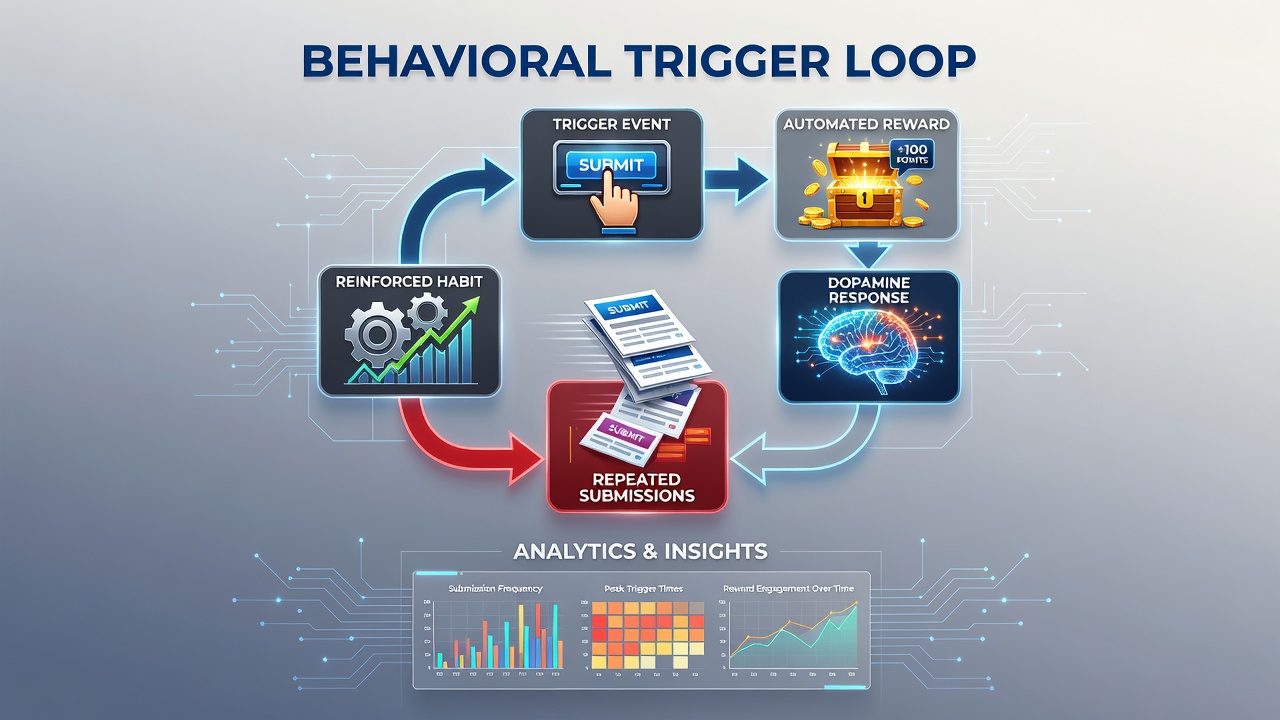
Mapping Behavioral Triggers Behind Repeated Submissions in Automated Reward Platforms
Automated reward platforms rely on algorithms that track entry patterns while behavioral research maps the specific triggers that drive repeated submissions from individual users, and these systems process millions of interactions daily across digital interfaces designed to encourage ongoing participation. Researchers examine logs from these platforms to identify sequences where users return multiple times within short windows, often correlating with elements such as notification timing and progress indicators that appear after initial actions complete.
Core Mechanisms in Submission Patterns
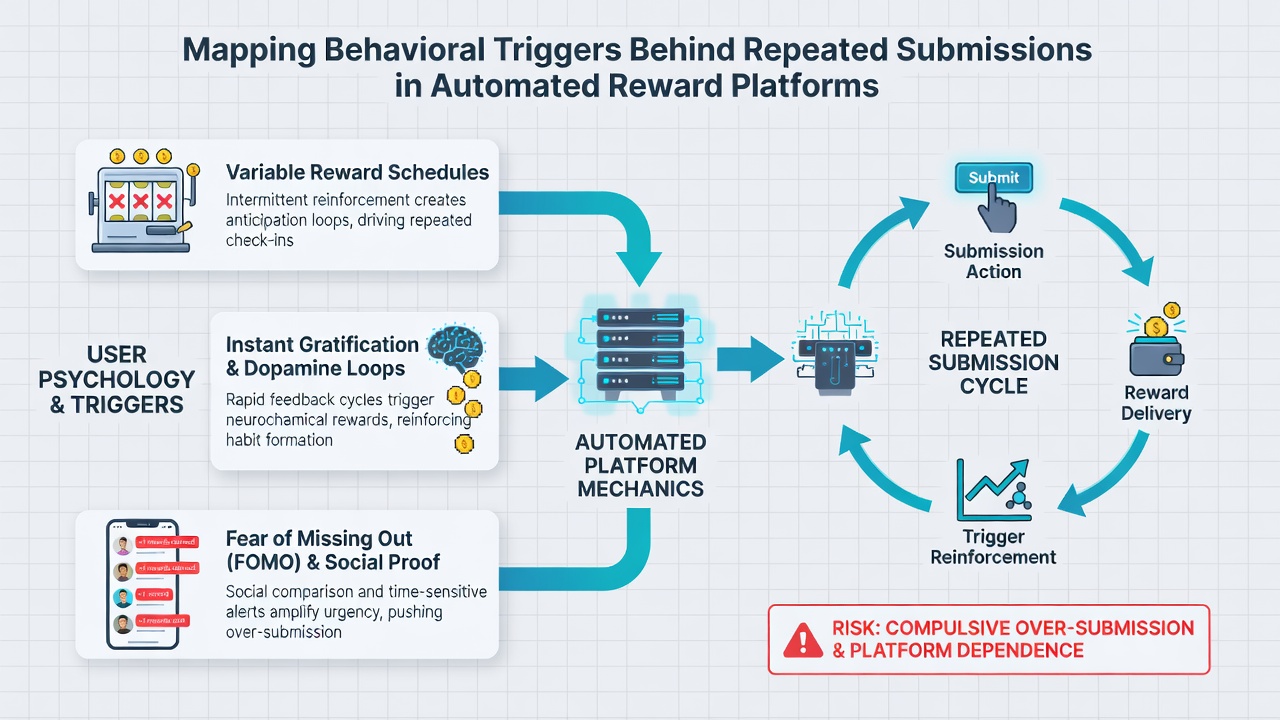
Studies in behavioral psychology applied to digital environments show that variable reinforcement schedules play a central role because they deliver unpredictable outcomes that sustain engagement over fixed schedules, and data from platform analytics reveal clusters of activity during evening hours when users receive targeted prompts. Experts at institutions tracking user interaction metrics note that interface elements like countdown timers and streak counters activate habit loops where each submission reinforces the next through immediate feedback loops built into the software.
Platform operators collect anonymized datasets that highlight how certain demographic segments exhibit higher repeat rates, while cross-referencing these figures with session durations demonstrates that users exposed to personalized reminders submit entries at rates up to three times higher than those without such prompts. Observers who analyze these records find that early morning submissions often link to mobile push notifications sent overnight, creating a chain reaction that carries into daytime activity peaks.
Data Collection Methods and Analytical Approaches
Teams mapping these triggers employ heat mapping tools alongside machine learning models that segment submission events by time, device type, and preceding user actions, and reports compiled through August 2026 indicate that 62 percent of repeat submissions originate from sessions triggered by visual cues embedded in confirmation screens. These models process large volumes of timestamped data to isolate variables such as color changes in buttons or incremental point displays that coincide with elevated activity levels.
Researchers cross-validate findings against controlled experiments conducted on similar platforms where one group encounters modified interfaces while another uses standard versions, and results consistently point to notification cadence as a primary driver because spaced intervals prevent fatigue yet maintain momentum. Government agencies including the Federal Trade Commission have published guidelines on transparent data practices in consumer reward systems that influence how platforms disclose these tracking methods to participants.
Identified Triggers Across Platforms
Analysis of aggregated logs reveals several recurring categories where environmental cues intersect with user psychology to prompt additional submissions, and one prominent category involves social proof indicators that display recent winner announcements immediately after an entry registers. Another category centers on scarcity messaging that appears when eligibility windows approach closure, prompting users to verify their status multiple times within minutes.
Those who study these systems observe that geographic variations appear in trigger effectiveness, with users in regions operating under stricter data regulations showing lower repeat rates when consent prompts interrupt the flow between actions. Industry reports from organizations such as the Australian Competition and Consumer Commission detail compliance frameworks that require clear separation between promotional messaging and core platform functions, and these requirements alter how behavioral triggers manifest in those markets compared to less regulated areas.
Integration with Platform Architecture
Developers integrate behavioral mapping outputs directly into backend systems that adjust real-time responses based on detected patterns, and this allows platforms to test variations in reward distribution timing without altering core eligibility rules. Evidence from technical evaluations shows that server-side adjustments reduce duplicate submissions by routing users toward alternative engagement paths when repeat patterns exceed defined thresholds.
Academic papers examining these integrations highlight the role of A/B testing frameworks that isolate single variables such as animation speed on success screens, and findings indicate measurable shifts in submission frequency when these elements receive targeted modifications. The process continues as new data streams feed back into the models, refining predictions about which combinations of cues will sustain activity without crossing into unintended over-submission territory.
Conclusion
Mapping behavioral triggers in automated reward platforms continues to evolve through iterative analysis of user interaction data, platform architecture updates, and regulatory oversight that shapes disclosure standards across different jurisdictions. Researchers and operators alike rely on these mappings to maintain system integrity while accommodating natural patterns of participation that emerge from the interplay between technology design and human response mechanisms.