Investigating the Correlation Between Form Field Complexity and Abandonment Rates in Virtual Giveaway Submissions
Cameron Koch · Jun 29, 2026
Investigating the Correlation Between Form Field Complexity and Abandonment Rates in Virtual Giveaway Submissions
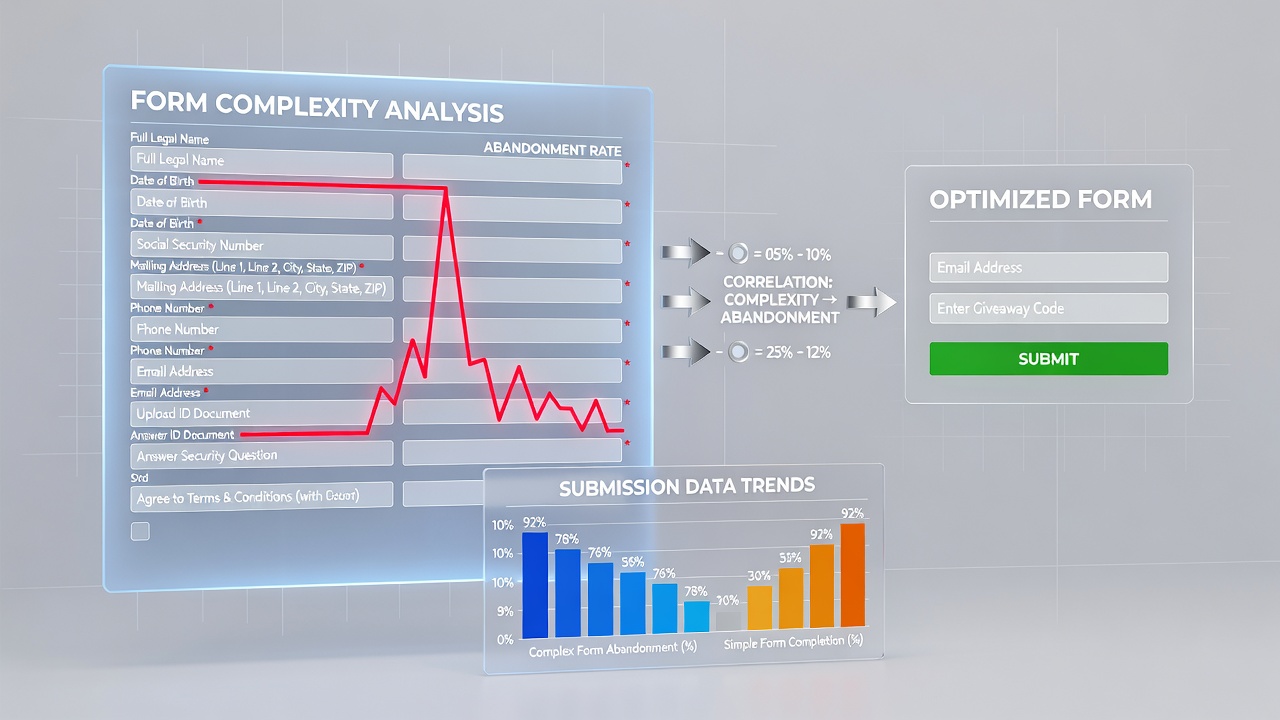
Virtual giveaway submissions often require participants to complete online forms that vary widely in length and detail, and researchers have tracked how these differences influence completion rates across platforms. Studies conducted in early 2026 examined thousands of entry attempts and found that the number of required fields directly affects whether users finish the process or leave midway through.
Defining Form Field Complexity in Digital Contests
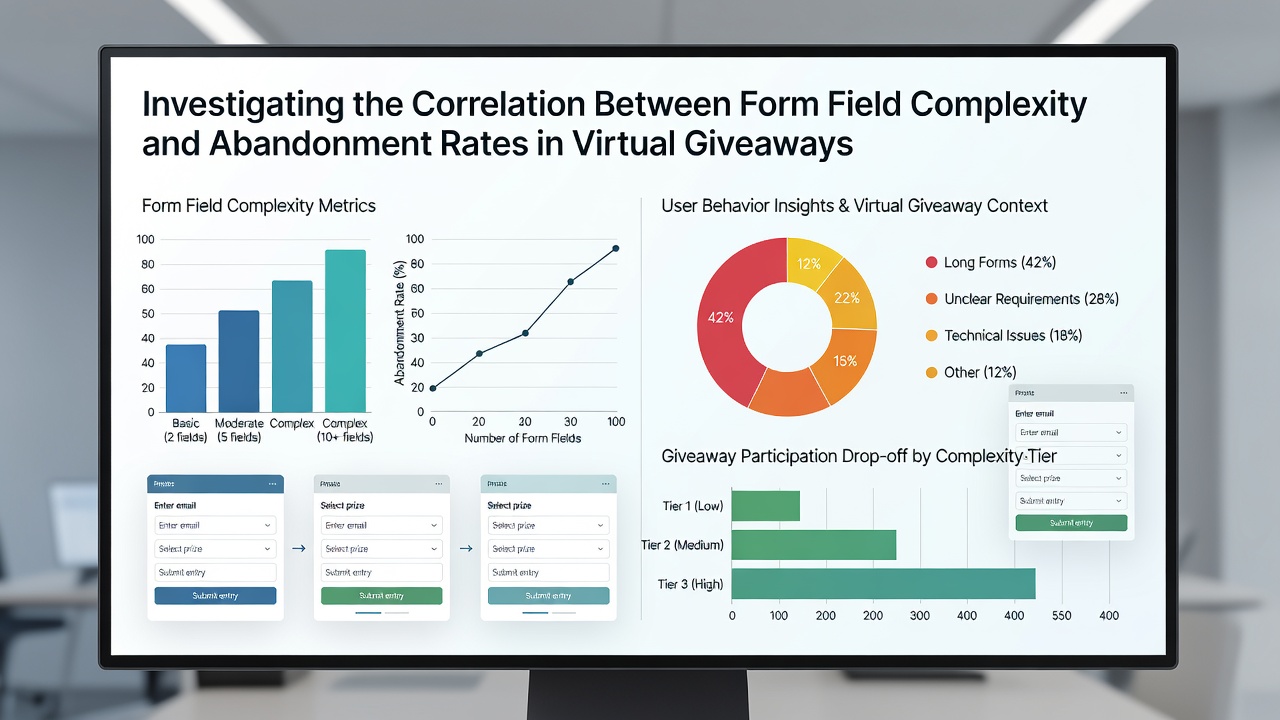
Form field complexity encompasses the total count of input areas, the variety of data requested such as email addresses, physical locations, phone numbers and demographic details, plus any conditional logic that reveals additional questions based on prior answers. Platforms running recurring contests collect this information to verify eligibility and distribute prizes, yet each extra element adds friction that can interrupt the submission flow. Data collected from multiple contest sites shows that basic forms limited to three fields maintain higher completion percentages while those exceeding eight fields experience measurable drops in submissions.
Research Findings on Abandonment Patterns
Analysts reviewing entry logs from 2025 through June 2026 identified consistent patterns where abandonment rates rose alongside increases in required fields, and one dataset covering North American and European platforms indicated that each additional mandatory field correlated with a 12 to 18 percent rise in exit rates before final confirmation. Observers note that mobile users abandoned complex forms at higher frequencies than desktop participants, particularly when forms demanded address verification or multiple contact methods, and these trends held steady across different prize types and entry deadlines. Figures from the Australian Digital Transformation Agency highlight similar outcomes in government service forms, where streamlined versions reduced drop-offs by significant margins compared with longer equivalents.
Geographic and Platform Variations in Submission Behavior
Entry data gathered from contests open to international participants revealed regional differences in tolerance for detailed forms, with users in certain markets completing longer questionnaires more readily when prize values appeared higher. Researchers tracking activity on cross-border events discovered that forms requesting tax-related identifiers produced sharper abandonment spikes in regions without prior experience submitting such details for rewards programs. Platforms that tested progressive disclosure techniques, revealing fields only when necessary, recorded improved retention compared with static layouts that displayed every question upfront, and these adjustments proved effective during high-volume periods such as summer contest cycles.
Technical Factors Affecting Completion Rates
Server-side validation processes and real-time error messaging influence whether participants persist through complex forms, and systems that provide immediate feedback on incorrect entries help lower abandonment compared with delayed notifications that occur only after full submission attempts. Studies indicate that forms incorporating auto-fill capabilities from browser data or account profiles maintain stronger completion rates even when field counts remain elevated, while those lacking such features see users exit when re-entering information becomes repetitive. In June 2026 reports from Canadian digital service evaluations, integration of these assistive tools correlated with measurable improvements in overall submission volumes for reward-based campaigns.
Strategies Observed in Successful Implementations
Contest operators have adjusted form designs by prioritizing essential verification fields and moving optional demographic questions to post-entry surveys, and this approach has produced documented increases in initial submissions across several tracked programs. Those managing large-scale giveaways often segment data collection so that core eligibility checks occur first, followed by additional details only after confirmation of entry, which reduces early exits during the initial stages. Evidence from industry reports shows that testing variations in field order and labeling leads to optimized layouts that balance necessary compliance requirements with user persistence through the entire process.
Conclusion
Analysis of virtual giveaway submissions continues to demonstrate clear connections between form field complexity and abandonment rates, with quantitative data supporting targeted reductions in required inputs as a reliable method for improving completion metrics. Platforms that monitor these patterns and apply iterative design changes based on user behavior data achieve higher volumes of verified entries while still meeting verification standards for prize distribution. Ongoing research in this area supplies contest organizers with actionable metrics to refine their entry systems as digital participation grows.