How Social Media Algorithms Shape Discovery Patterns for Niche Online Reward Events
Cameron Koch · Aug 8, 2026

How Social Media Algorithms Shape Discovery Patterns for Niche Online Reward Events
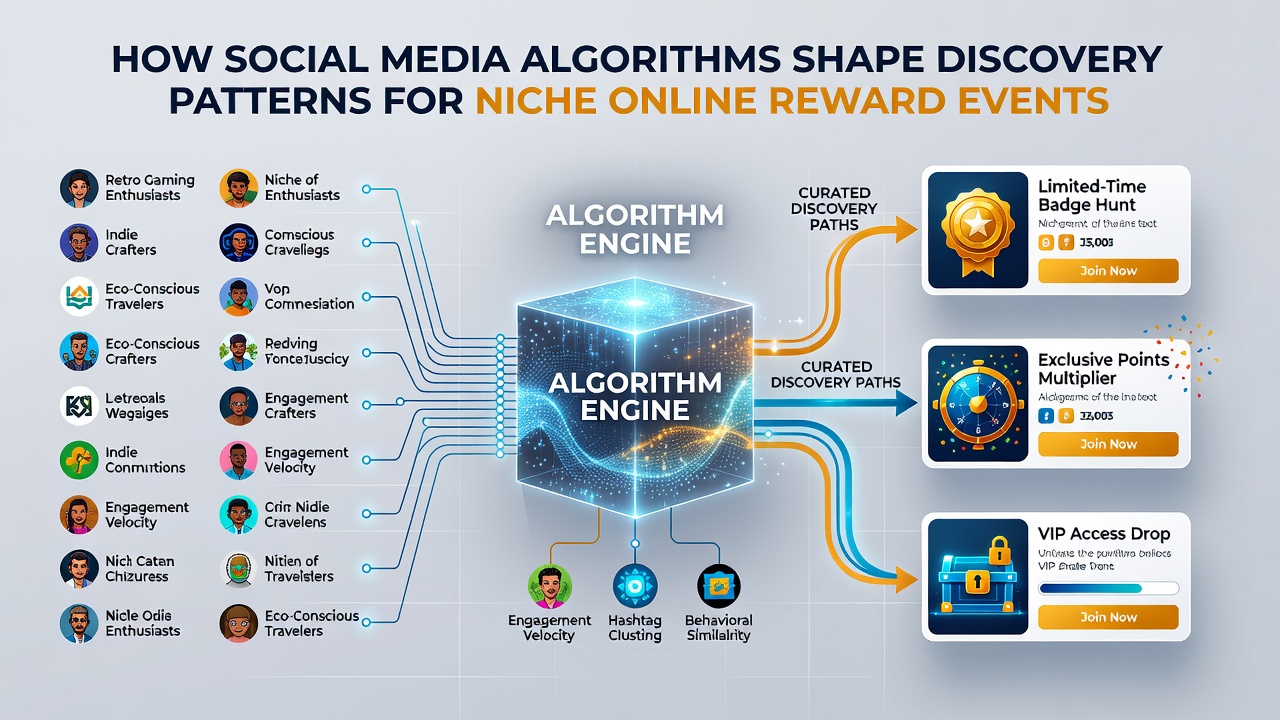
Social media algorithms determine which posts users encounter first, and this process directly influences how niche online reward events reach their intended audiences. Platforms process signals such as engagement rates, user history, and network connections to rank content, which means events tied to specific hobbies or communities surface primarily when those signals align. Data from platform transparency reports indicate that recommendation systems account for over 70 percent of content discovery on major networks, creating concentrated pathways rather than broad exposure. Researchers tracking these systems note that niche reward events often begin within closed groups or follower clusters before algorithms amplify them outward. When participants share entries or results, the platforms interpret those actions as relevance markers and extend visibility to similar profiles. This mechanism produces discovery patterns that favor events matching existing user interests while limiting crossover to unrelated audiences.Platform Mechanisms Driving Visibility
Different networks apply distinct ranking priorities that affect reward event reach. On short-form video platforms, watch time and completion rates push clips announcing micro-contests or hobby-based giveaways toward users who previously engaged with comparable themes. Feed-based services weigh comments and shares more heavily, so events that spark discussion within tight-knit communities gain additional distribution. Studies compiled by the European Commission's digital services oversight unit show that algorithmic weighting of interaction velocity can increase initial reach by factors of three to five within the first hours after posting. Those same studies document how repeated interactions from a core group trigger secondary waves of recommendations to extended networks.Effects on Niche Participant Pools
Niche reward events rely on targeted discovery because their prize structures and entry rules appeal to narrow demographics. Algorithms reinforce this by clustering users around shared behaviors, which means an event focused on vintage camera photography surfaces mainly among accounts already following restoration tutorials or equipment reviews. Observers tracking participation logs report that entry volumes stabilize quickly once the initial algorithmic push subsides, creating predictable peaks rather than sustained growth. This clustering also shapes geographic patterns. When location data combines with interest signals, events restricted to certain regions appear first to users inside those boundaries. Figures released in mid-2025 by Australia's eSafety Commissioner highlight how cross-border discovery drops sharply when algorithms prioritize local content compliance signals.