How Referral Networks Redirect Traffic in Niche Online Reward Ecosystems
Erik Perry · Aug 12, 2026
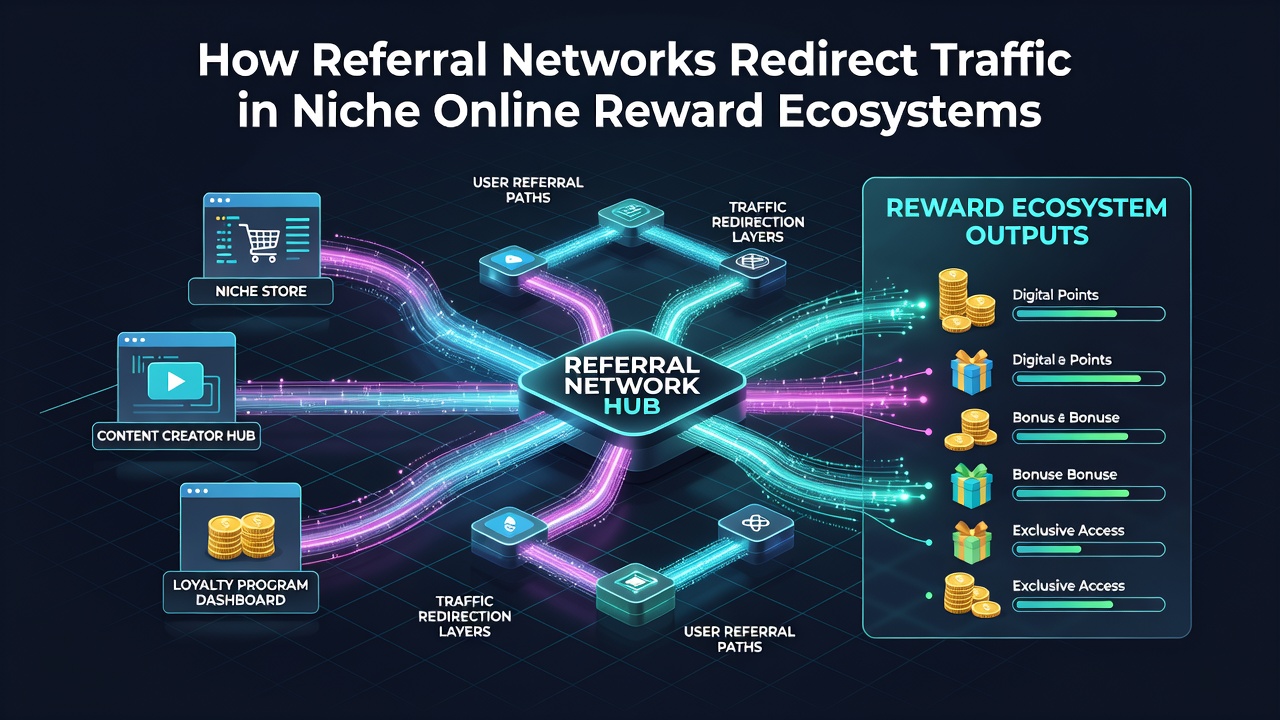
How Referral Networks Redirect Traffic in Niche Online Reward Ecosystems
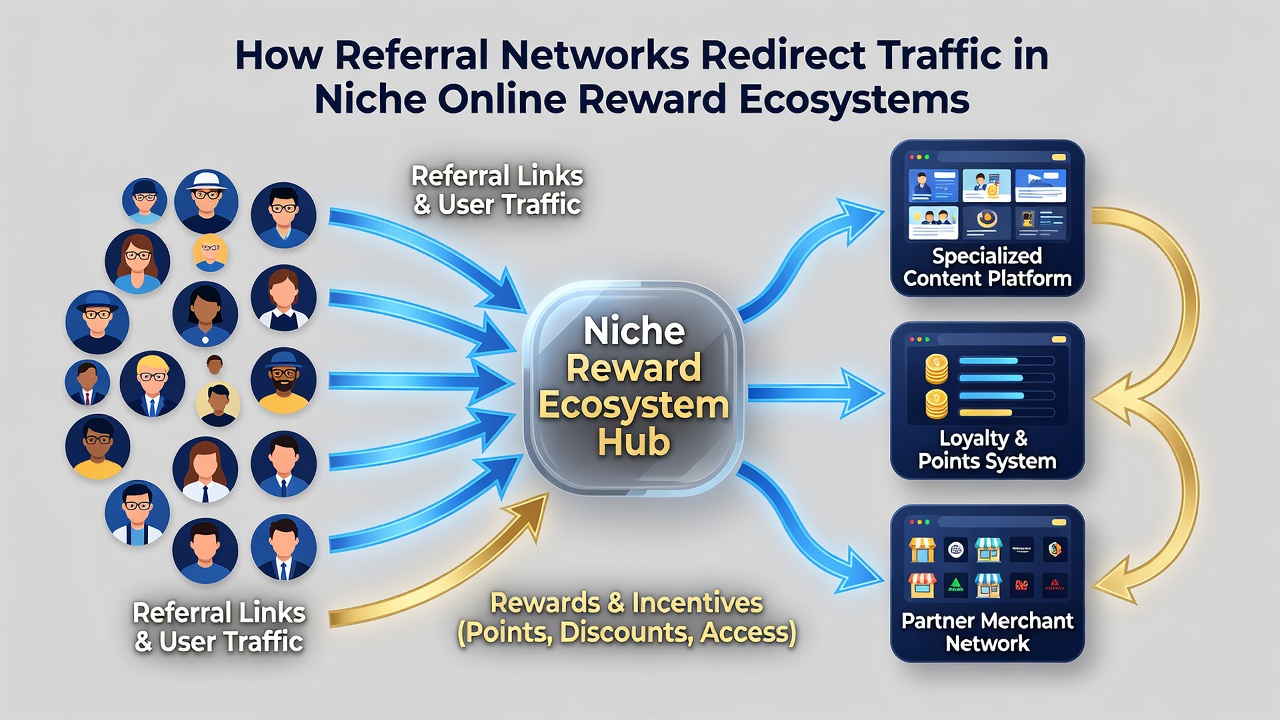
Referral networks operate as structured systems that connect participants in niche online reward platforms where users earn points, credits, or digital incentives for completing tasks, sharing content, or inviting others, and these networks redirect traffic by channeling new users through personalized links that track origins and allocate rewards accordingly.
Core Mechanics of Referral Systems
Referral systems in these ecosystems rely on unique identifiers embedded in shareable links or codes that record the source of each new participant, which allows platforms to monitor how traffic flows from existing users to potential ones while maintaining accurate attribution for bonus distributions, and this process often integrates with analytics tools that log entry points, session durations, and conversion rates across multiple devices.
Platforms implement these mechanisms through application programming interfaces that connect user accounts to external sharing channels such as social media groups, email lists, and messaging apps, and the redirection occurs when a referred user clicks a link that routes them to a landing page preloaded with tracking parameters that persist through cookies or server-side sessions.
Traffic Patterns and Redirection Techniques
Traffic redirection in reward ecosystems follows predictable routes where initial referrals come from high-engagement users who share within targeted communities, and subsequent flows move through layered networks that include secondary invites from new participants, which amplifies reach while concentrating activity around specific reward categories like digital gift cards or subscription credits.
Studies from academic institutions indicate that referral links increase session starts by routing users directly to customized dashboards, and this method reduces drop-off rates compared to organic searches because the incoming traffic arrives with pre-established trust signals from the referrer, while data from industry reports shows that platforms using tiered reward structures see sustained redirection loops lasting several weeks after initial shares.
Integration with Platform Algorithms
Algorithms on reward sites adjust visibility and incentive levels based on referral performance metrics, which means successful networks receive boosted promotion in user feeds or notification systems, and this creates feedback cycles where redirected traffic generates additional referrals that further shape content prioritization and eligibility for time-limited offers.
Technical implementations often include fraud detection layers that verify unique device fingerprints and IP patterns to prevent artificial inflation of referral counts, and observers note that these safeguards redirect suspicious traffic away from reward pools toward verification queues that require additional confirmation steps before processing.
Research conducted at various universities demonstrates that referral networks perform differently across geographic regions because local regulations on data tracking influence how links persist across borders, and in August 2026 several platforms updated their systems to comply with evolving privacy standards that altered redirection speeds for users in certain jurisdictions.
Measurement and Performance Data
Performance tracking relies on aggregated statistics that reveal how referral volume correlates with overall platform growth, and figures from trade associations show that ecosystems focused on niche rewards such as specialized loyalty currencies experience higher redirection efficiency when networks target users with matching interest profiles rather than broad audiences.
One documented case involved a reward platform that introduced referral multipliers during peak periods, which resulted in traffic spikes redirected from external forums into the main site, and analysts recorded that these events produced measurable increases in daily active users without corresponding rises in support queries related to entry issues.
Challenges in Network Maintenance
Maintaining referral networks requires ongoing adjustments to link expiration rules and reward caps because unchecked redirection can overload server resources or dilute incentive value for long-term participants, and experts observe that platforms address this through automated throttling that slows new referrals once daily thresholds are met.
Cross-platform integrations allow some ecosystems to pull traffic from affiliated apps or partner sites, which extends the reach of referral chains while introducing additional validation layers to ensure accurate credit assignment across different reward types.
Conclusion
Referral networks continue to shape traffic dynamics in niche online reward ecosystems by providing measurable pathways for user acquisition and engagement, and ongoing developments in tracking technology along with regulatory updates support the refinement of these systems to balance growth with compliance requirements across diverse participant bases.