How IP Rotation Patterns Influence Submission Integrity Across Multi-Device Reward Platforms
Ellis Simmons · Aug 17, 2026

How IP Rotation Patterns Influence Submission Integrity Across Multi-Device Reward Platforms
IP rotation involves cycling through different internet protocol addresses during online interactions, and this practice has become a focal point for administrators managing multi-device reward platforms where users submit entries for prizes or incentives. Platforms track submission origins to maintain integrity, yet rotation patterns introduce complexities because they can mask repeated attempts from the same participant or reflect legitimate shifts in network connections on mobile and home devices.
Core Mechanics of IP Rotation in Entry Systems
Users access reward platforms through smartphones, tablets, and computers that connect via cellular carriers or Wi-Fi networks, and each connection assigns an IP address that may change dynamically due to carrier policies or proxy services. Researchers at institutions studying digital verification have documented how rotation occurs either automatically through VPN applications or manually when individuals switch networks, which creates datasets that verification algorithms must parse to distinguish between compliant behavior and attempts to exceed entry limits. Data from industry reports indicate that in 2025 over 40 percent of multi-device sessions on reward sites exhibited some form of address cycling, prompting developers to refine detection thresholds that account for both user mobility and potential manipulation.
Verification Protocols and Pattern Analysis
Submission integrity relies on server-side checks that log timestamps, device fingerprints, and address sequences, while algorithms flag clusters of entries sharing behavioral traits across rotated IPs. Observers note that platforms integrate machine learning models trained on historical entry logs, allowing them to correlate rapid address changes with duplicate submissions even when device identifiers vary slightly. According to guidelines published by the Federal Trade Commission, operators must balance fraud prevention with user accessibility, and this has led to adoption of graduated response systems that issue warnings before disqualifying patterns rather than immediate blocks.
But here's the thing: natural IP shifts happen frequently on 5G networks where handoffs between towers assign new addresses, so systems incorporate geolocation cross-checks to separate routine mobility from deliberate evasion tactics. Studies from Canadian research centers have shown that incorporating carrier-specific data reduces false positives by approximately 25 percent in daily reward events, because certain providers rotate addresses more aggressively than others during peak usage hours.
Multi-Device Environments and Their Challenges
Participants often switch between phones and laptops within short timeframes, and each transition can trigger an IP update that verification layers must evaluate against session histories. Experts have observed that sophisticated rotation patterns emerge when individuals employ residential proxy pools, which mimic home connections and complicate efforts to link submissions to single accounts. In August 2026 several major platforms updated their protocols to require secondary authentication factors such as one-time codes sent to verified numbers, a step that directly addresses rotation-based circumvention while preserving access for legitimate multi-device users.
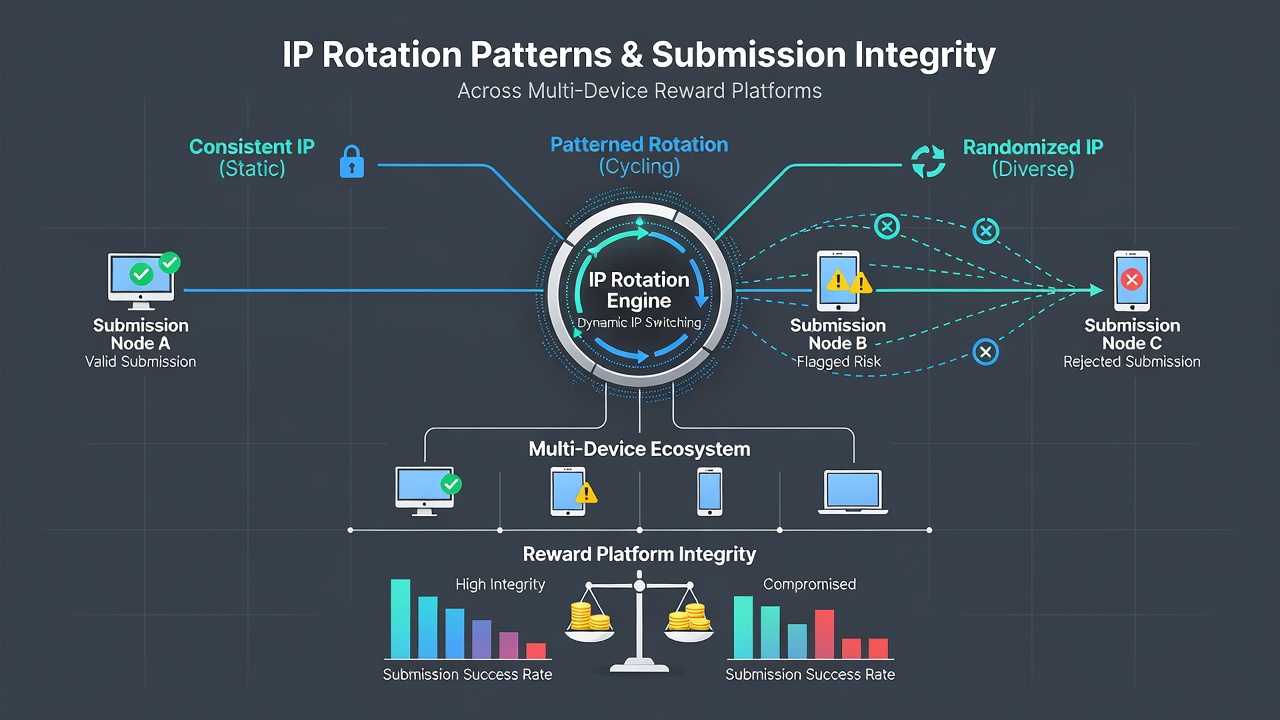
What's interesting is how aggregated logs reveal recurring sequences where addresses cycle through specific ranges at predictable intervals, patterns that academic papers on network forensics have linked to automated scripting rather than organic user activity. Platforms respond by adjusting rate limits dynamically, and evidence from trade association analyses suggests these adjustments correlate with measurable declines in duplicate entries across global campaigns.
Regulatory and Technical Responses
Government agencies in Australia and the European Union have issued frameworks that require reward operators to disclose verification methods to participants, which includes explanations of how address monitoring supports fair distribution of prizes. These regulations encourage transparency without mandating specific technical implementations, leaving room for platforms to experiment with behavioral biometrics that complement IP analysis. Industry organizations report that combining IP rotation monitoring with device telemetry produces higher accuracy in identifying coordinated submissions, particularly when entries originate from shared proxy infrastructures.
Turns out the interplay between rotation frequency and submission volume serves as a key indicator, because spikes in address diversity within narrow time windows often precede system alerts for policy violations. Developers continue to refine these models using anonymized datasets shared under research agreements, and the resulting improvements help maintain integrity without unduly restricting participants who travel or use multiple legitimate connections.
Conclusion
IP rotation patterns continue to shape how multi-device reward platforms safeguard submission integrity through layered detection that accounts for both technological realities and user behaviors. Ongoing refinements in verification techniques, informed by data from regulatory bodies and research institutions, support equitable outcomes across diverse participant pools while addressing evolving methods of entry management.