How Influencer Endorsements Shift Submission Trends Across Global Contest Events
Cameron Koch · Aug 15, 2026
How Influencer Endorsements Shift Submission Trends Across Global Contest Events
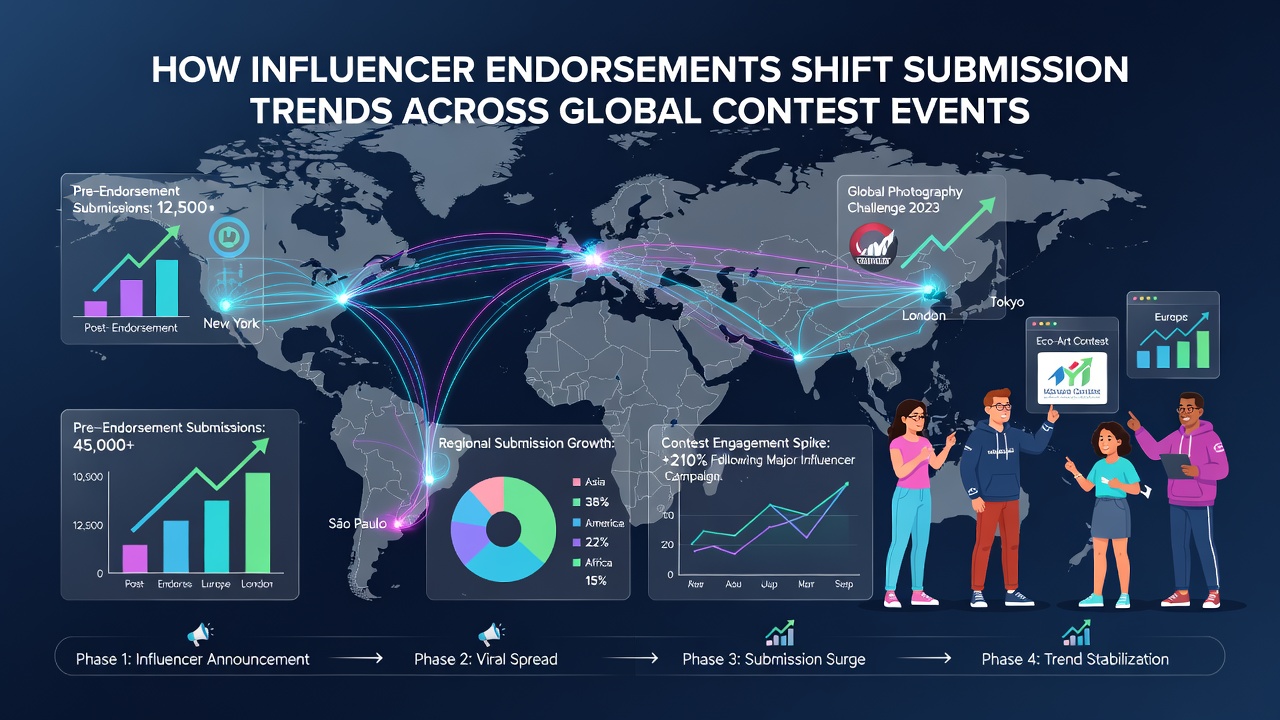
Contest organizers across multiple continents track how endorsements from social media figures alter the volume and geographic distribution of entries in recurring prize events, and data compiled through 2025 shows measurable spikes following coordinated campaigns. Researchers examining platform analytics note that posts from verified accounts with large followings generate immediate surges in submissions, often concentrated within the first 48 hours after publication, while sustained mentions over several days extend those increases across wider time zones.
Platform Algorithms and Entry Volume Patterns
Algorithms on major networks prioritize content from established creators, which pushes contest announcements into feeds of users who match demographic profiles of previous winners, and this mechanism produces clustered submissions from specific regions rather than uniform global distribution. Observers tracking entry logs from 2024 events found that TikTok and Instagram campaigns reached audiences in Southeast Asia and Latin America at higher rates than traditional email blasts, resulting in submission shares from those areas rising by double-digit percentages within the same reporting cycles.
Studies of recurring digital contests reveal that influencers who disclose partnerships through standardized tags trigger compliance filters that preserve entry validity, whereas undisclosed promotions sometimes face removal or reduced visibility. By August 2026, several platforms had updated their detection systems to flag repeated contest promotions, yet data indicates that properly tagged endorsements still correlate with sustained entry growth over multi-week periods.
Regional Variations in Submission Shifts
European contest operators report different outcomes compared with North American counterparts when the same influencer collaborates across borders, largely because local regulations on promotional disclosures and tax reporting shape participant willingness to submit. Figures from aggregated event archives show that campaigns featuring creators based in the European Union draw more entries from EU member states, while North American influencers expand participation from Canada and the United States in parallel events.
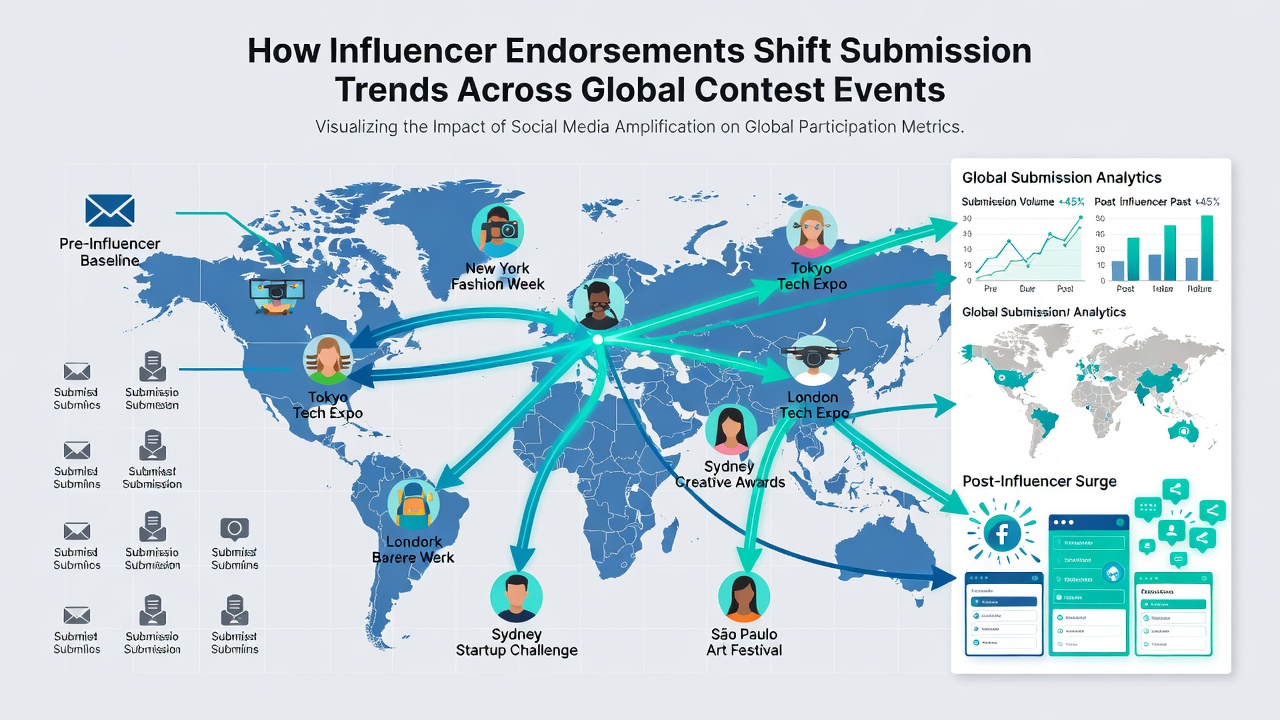
One analysis of cross-border reward programs highlighted that Australian and New Zealand participants respond strongly to endorsements from creators in the same time zone, producing tighter submission windows around local posting times. In contrast, events promoted by creators in East Asia attracted entries from broader time spans because of staggered audience activity across continents.
Data Sources and Measured Outcomes
According to reports published by the Federal Trade Commission, clear disclosure practices maintain trust levels that support continued engagement in promotional activities, including contest entries. Separate research from the OECD on digital marketing trends documents how influencer reach expands audience pools beyond traditional advertising channels, a pattern observed in global contest data as well.
Contest administrators who integrate tracking pixels with influencer content observe direct attribution of entry increases to specific posts, allowing organizers to adjust future campaigns based on performance metrics rather than broad assumptions. Those metrics include not only total submissions but also completion rates for required verification steps, which rise when audiences already familiar with the creator follow through on entry processes.
Longer-Term Effects on Contest Structures
Repeated endorsements lead some organizers to modify eligibility rules or entry caps to accommodate higher volumes without overwhelming verification systems, and this adjustment appears in events that previously limited daily submissions. Observers note that platforms hosting such events sometimes introduce tiered verification for high-traffic periods triggered by influencer activity, reducing processing delays that could otherwise discourage later entrants.
Case examples from 2025 multi-platform campaigns demonstrate that combining short video endorsements with static image posts extends the duration of elevated submission rates compared with single-format promotions. The combined approach maintains visibility across algorithm changes, supporting steadier entry flows rather than sharp peaks followed by rapid declines.
Conclusion
Global contest data through mid-2026 illustrates consistent correlations between influencer activity and shifts in submission geography, timing, and volume when disclosures meet platform standards. Organizers who monitor these patterns adjust outreach strategies to align with observed audience responses across regions, while verification systems adapt to handle resulting traffic variations without altering core eligibility requirements.