Demographic Shifts in Niche Reward Events: How Age and Interest Clusters Drive Participation Trends Across Specialized Digital Competitions
Greta Coleman · Jun 22, 2026
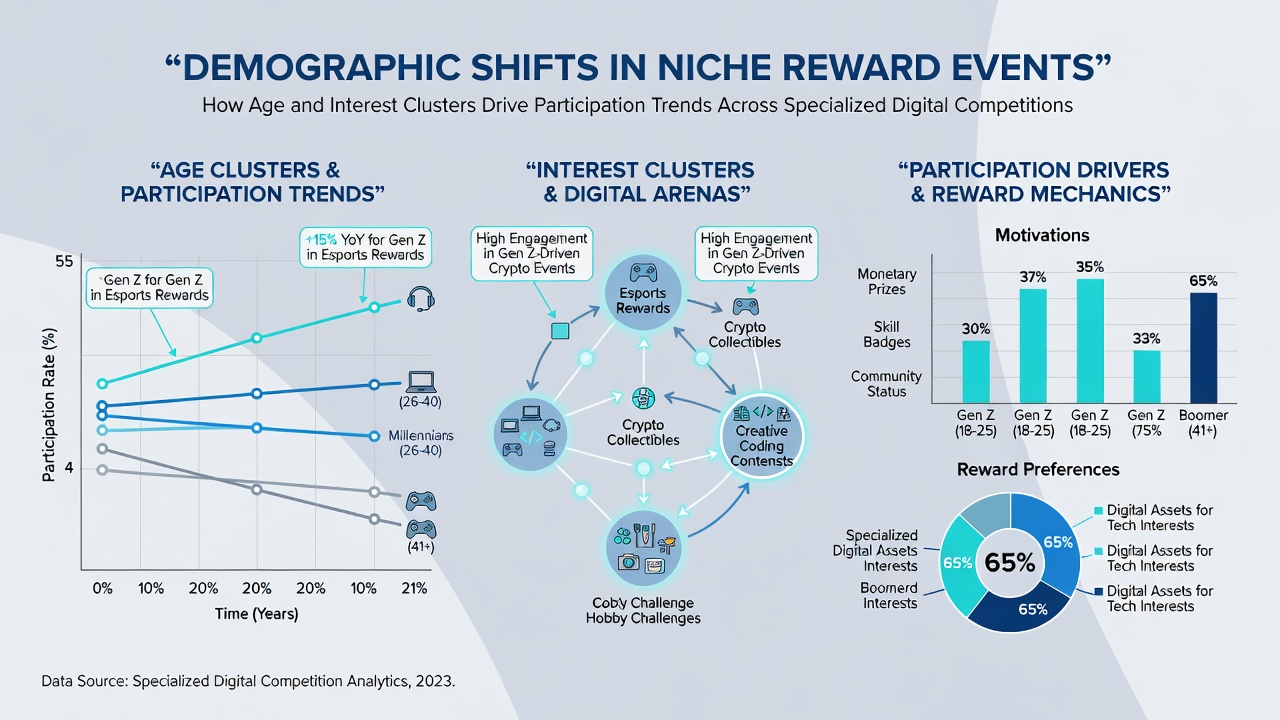
Demographic Shifts in Niche Reward Events: How Age and Interest Clusters Drive Participation Trends Across Specialized Digital Competitions
Specialized digital competitions have undergone measurable changes in participant demographics over recent years, with data tracking how age groups and shared interests shape entry volumes and engagement patterns. Researchers tracking online reward platforms note that clusters formed around specific hobbies or life stages consistently influence who joins and how often submissions occur, particularly in events tied to gaming, creative arts, or tech gadgets. Figures from industry reports reveal that participation rates in these niche formats rose steadily through 2025 and into mid-2026, driven by targeted outreach that aligns contest themes with demographic preferences.
Age Clusters and Their Role in Entry Patterns
Younger participants, often those aged 18 to 34, dominate entries in competitions centered on digital collectibles and mobile gaming rewards, according to aggregated platform analytics released in early 2026. These groups respond strongly to fast-paced entry mechanics and social sharing features, which allow quick submissions during short time windows. In contrast, adults between 35 and 54 show higher involvement in contests offering practical prizes like home technology or professional development tools, where verification processes emphasize detailed profile matching. Older cohorts, 55 and above, maintain steady participation in memory-themed or lifestyle reward events, though their submission rates fluctuate with simpler interface designs that reduce technical barriers.
Studies conducted by academic institutions across North America and Europe highlight that age-related preferences extend beyond prize selection into timing and format choices, with data showing distinct peaks for each cluster during seasonal campaigns. For instance, summer events in June 2026 attracted disproportionate numbers from the 18-34 segment when paired with esports tie-ins, while fall promotions drew balanced responses from mid-career professionals seeking career-oriented incentives.
Interest-Based Groupings and Participation Drivers
Interest clusters form another key layer, where enthusiasts in areas such as vintage restoration, sustainable living, or virtual reality experiences gravitate toward matching reward events. Observers note that these groups often coordinate through dedicated online forums, leading to synchronized entry surges once announcements appear. Platform operators report that contests segmented by hobby yield repeat participation rates up to twice as high as general-audience giveaways, because participants already share knowledge networks that facilitate compliance with entry rules.
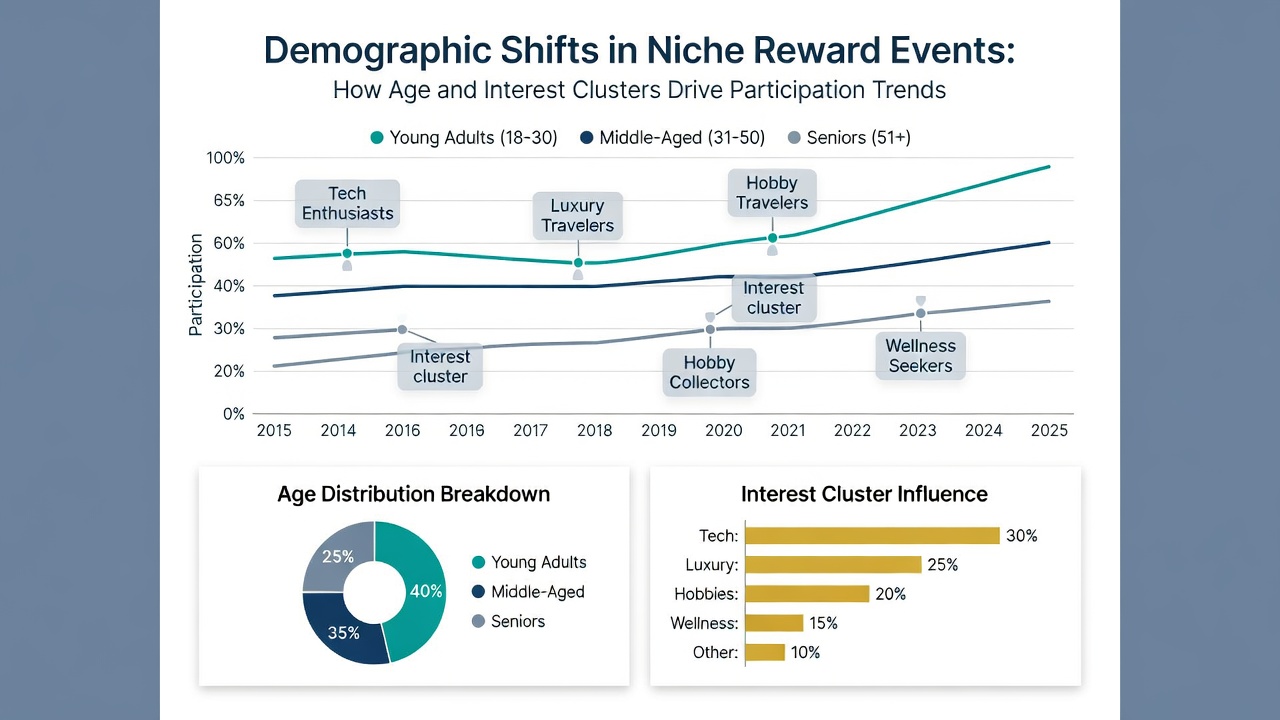
Evidence from multi-year tracking by research firms indicates that overlapping age and interest factors amplify trends, as seen when tech-savvy retirees join virtual prototyping challenges alongside younger innovators. Such intersections create hybrid participant pools that sustain activity across multiple rounds, especially when eligibility verification incorporates interest-specific criteria like prior project submissions or community affiliations.
Observed Trends Through Mid-2026
Global data compiled from various regional sources shows niche reward events experienced a 22 percent increase in specialized entries between 2024 and 2026, with interest clusters accounting for the majority of growth in non-cash prize categories. European regulatory filings and Australian market analyses both document parallel patterns, where age-defined groups adapt differently to digital verification layers introduced to combat fraud. North American statistics further confirm that events emphasizing creative or skill-based entries maintain higher retention among mixed-age clusters compared to purely random-draw formats.
Those monitoring these shifts point to interface updates and notification timing as amplifiers, since younger clusters engage more via mobile pushes while older groups favor email confirmations that align with established routines. Interest alignment also affects geographic reach, with certain hobby clusters crossing borders more readily when tax and eligibility details are clarified upfront through official channels.
Effects on Specialized Competition Structures
Competition organizers have adjusted rollout strategies to accommodate these demographic realities, incorporating tiered entry options that cater to varying age and interest profiles without altering core prize structures. Records from ongoing campaigns demonstrate that events blending multiple clusters achieve broader submission diversity, which in turn supports compliance audits by providing clearer participant data trails. Industry associations in Canada and the European Union have published guidelines encouraging such segmentation, citing improved verification outcomes in targeted reward programs.
Additional patterns emerge when interest clusters interact with platform features, such as blockchain-based uniqueness checks that appeal particularly to tech-oriented groups. Participation metrics collected through June 2026 illustrate sustained activity in these adapted formats, underscoring how demographic mapping informs both design and outreach decisions across the sector.
Conclusion
Demographic shifts in niche reward events continue to reflect the interplay between age cohorts and interest alignments, with measurable impacts on entry trends and platform adaptations. Data from multiple regions consistently shows these factors guiding participation volumes in specialized digital competitions, shaping how organizers structure future initiatives to match observed cluster behaviors.