Data Synchronization Challenges Across Platforms in Coordinated Multi-Brand Giveaway Initiatives
Greta Coleman · Jul 1, 2026
Data Synchronization Challenges Across Platforms in Coordinated Multi-Brand Giveaway Initiatives
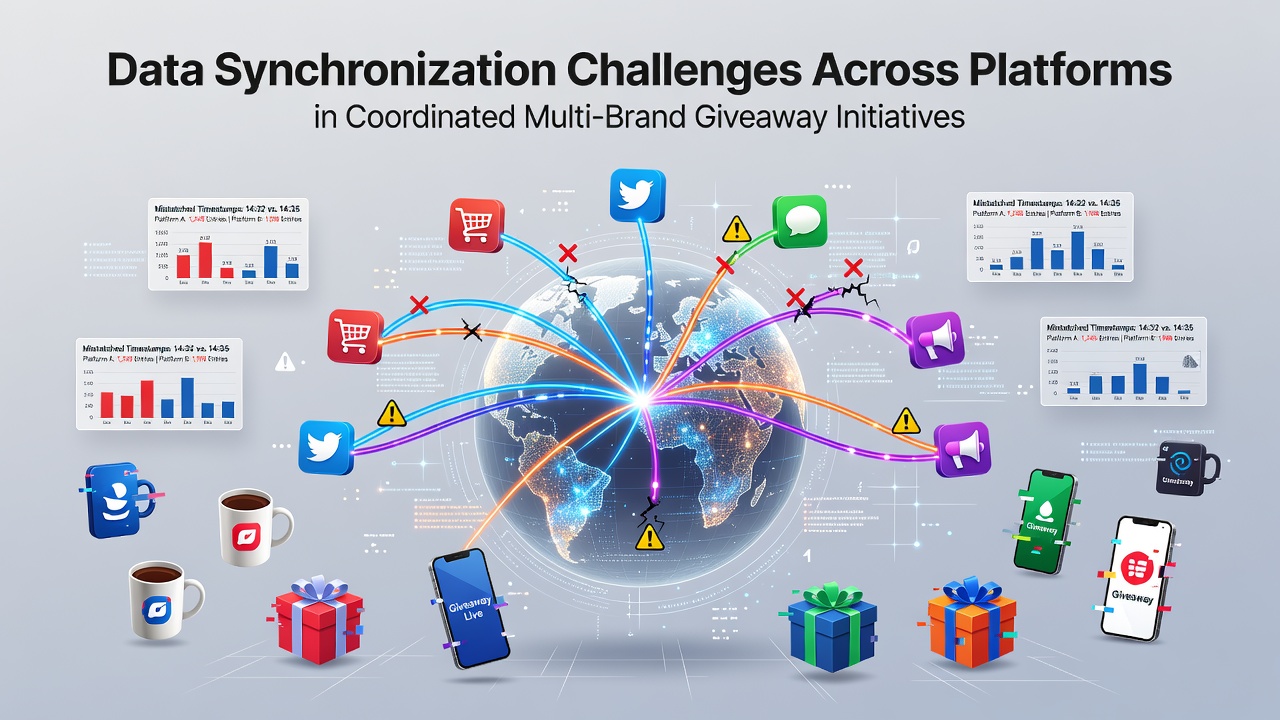
Coordinated multi-brand giveaway initiatives require precise alignment of entry data, eligibility records, and winner selections across separate company systems. Brands often operate distinct customer databases, API structures, and compliance protocols, which creates friction when participant information must update in real time. Observers note that these setups frequently involve simultaneous campaigns where one brand's mobile app feeds entries into another brand's web portal, and any mismatch triggers verification failures or duplicate submissions. Data formats represent one persistent obstacle. One platform might record timestamps in UTC while another uses local time zones, leading to discrepancies during cross-checks for daily entry limits. Research indicates that such inconsistencies appear more often in campaigns spanning retail, automotive, and consumer electronics partners, where legacy software coexists with newer cloud-based tools. Those who've studied these rollouts report that conversion scripts sometimes fail when fields like email addresses or phone numbers arrive in unexpected formats, forcing manual reviews that slow processing cycles. Latency issues compound the problem during high-volume periods. Peak entry surges occur when promotions launch across social channels and email blasts, and delays between platform handoffs allow some users to submit multiple times before synchronization completes. Figures from industry monitoring show that campaigns involving five or more brands experience average lag times of 45 to 90 seconds, enough to bypass basic duplicate detection in certain configurations. Security protocols add further layers of complexity. Each brand maintains its own encryption standards and access controls, so transferring hashed participant identifiers requires compatible key exchanges that not all systems support natively. Data shows that mismatched authentication methods have caused temporary blocks during coordinated events, particularly when one partner adheres to stricter regional privacy rules than the others.Platform Integration Patterns and Common Failure Points
Integration typically relies on middleware layers that pull and push records between endpoints, yet these connectors encounter version mismatches when one brand updates its API without notifying partners. Experts have observed that such updates, often scheduled independently, disrupt data flows until patches roll out across the network. In July 2026, updated data portability guidelines from the Australian Competition and Consumer Commission are set to require more transparent logging of these exchanges, which may prompt brands to standardize their middleware earlier in campaign planning.
Take one case where three consumer brands ran a joint summer promotion. Their shared entry pool needed to reflect purchases verified through separate loyalty programs, and initial tests revealed that purchase timestamps failed to sync when one system processed offline transactions hours after the others. The mismatch created gaps in eligibility tracking until developers added buffer windows and reconciliation routines. Similar patterns surface in reports from the Canadian Marketing Association, which tracks how multi-partner initiatives handle aggregated user data without violating individual consent scopes.Compliance Overlaps and Record Reconciliation
Giveaway rules often demand that each entry carry proof of eligibility tied to specific geographic or age criteria, yet platforms store this metadata differently. One system might flag residency through postal code validation while another uses IP geolocation, producing conflicting results when entries route across borders. According to a study released by the University of Toronto's Centre for Analytics, reconciliation errors rise by 18 percent in campaigns that cross national boundaries because of these divergent validation methods.
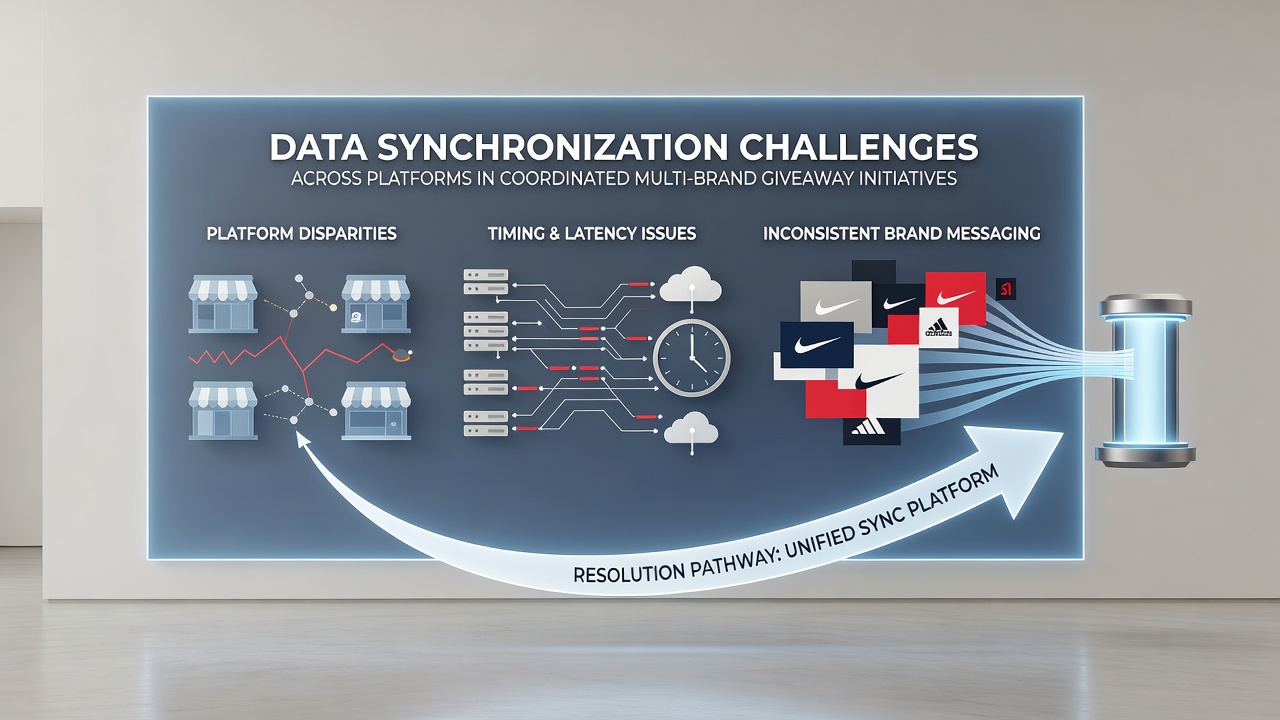 Those managing such initiatives increasingly deploy centralized dashboards that poll each platform at fixed intervals. These dashboards flag anomalies such as orphaned entries or mismatched prize claims, allowing teams to intervene before winners are announced. Data from recent rollouts indicates that daily reconciliation jobs reduce duplicate claims by nearly 30 percent compared with real-time-only approaches, although they introduce their own delay in finalizing results.
Emerging Standards and Technical Adjustments
Industry groups have begun publishing recommended schemas for giveaway data fields to ease synchronization burdens. Adoption remains uneven because smaller partners lack resources to overhaul existing databases. What's interesting is how some campaigns now incorporate blockchain-based ledgers for entry uniqueness checks, creating an immutable record that multiple brands can reference without exposing full participant lists. Early implementations, documented in proceedings from the IEEE International Conference on Data Engineering, demonstrate reduced collision rates but require additional computational overhead during peak hours.
Regulatory shifts continue to influence these technical choices. New provisions under consideration in several jurisdictions emphasize audit trails for every data transfer, pushing organizers to log synchronization events at the field level rather than the record level. Such requirements increase storage demands and necessitate careful capacity planning ahead of launch dates.Conclusion
Coordinated multi-brand giveaway initiatives depend on reliable data synchronization to maintain fairness and regulatory compliance. Challenges arise from format differences, latency during surges, security mismatches, and evolving compliance mandates. Teams address these through middleware refinements, scheduled reconciliations, and selective adoption of emerging standards like shared schemas or distributed ledgers. As July 2026 approaches with its updated portability rules, brands are expected to accelerate alignment efforts to keep cross-platform campaigns operational without interruption.