Behind the Clicks: What Entry Path Analytics Reveal About User Behavior in Prize Promotions
Greta Coleman · Jun 17, 2026
Behind the Clicks: What Entry Path Analytics Reveal About User Behavior in Prize Promotions
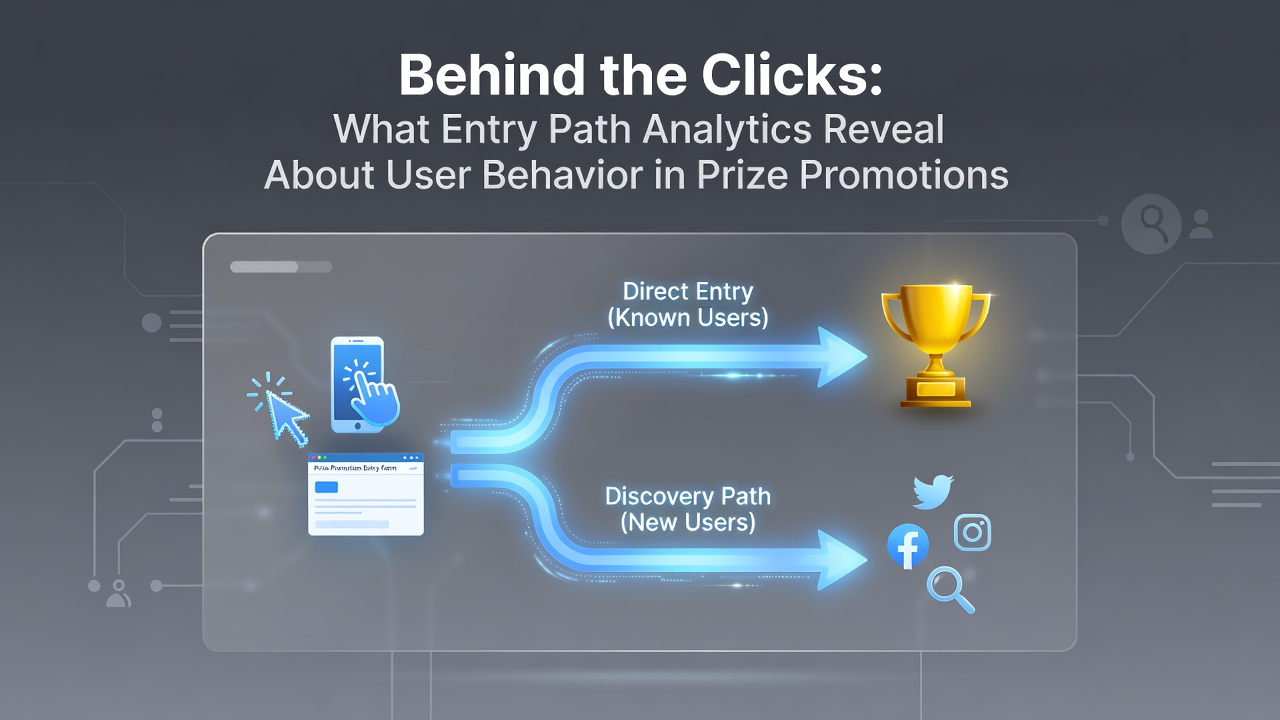
Entry path analytics track the specific routes users take when submitting entries to prize promotions, and these pathways expose distinct behavioral patterns across different participant groups. Data collected from digital entry systems shows that users arriving through email links tend to complete forms faster than those coming via social media referrals, while direct website visitors often spend more time reviewing rules before submitting. Researchers tracking these flows note consistent differences in completion rates tied to the initial touchpoint.
Common Entry Routes and Their Behavioral Signatures
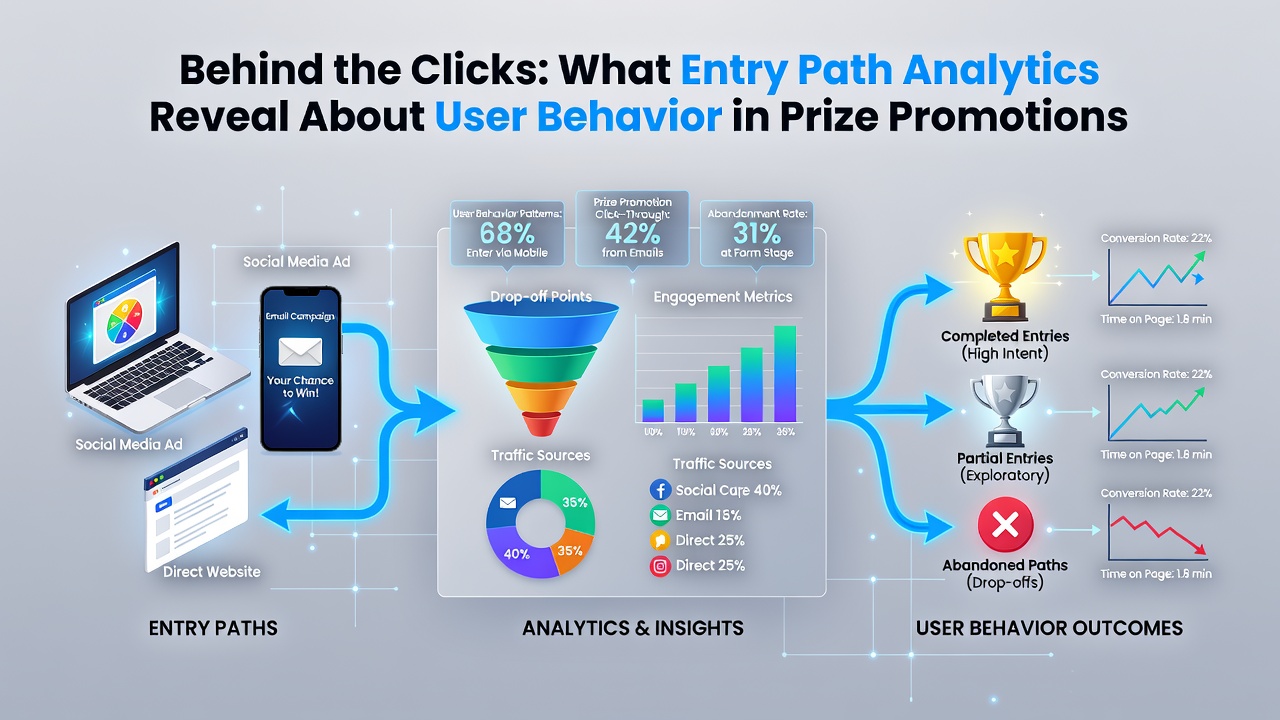
Analysts break down entry paths into categories such as email campaigns, social media shares, search engine results, affiliate partner sites, and mobile app notifications. Each route correlates with measurable variations in user actions. Email entrants frequently provide more complete demographic details during registration, whereas social media users show higher rates of multiple submissions across linked accounts. Studies compiled by industry platforms indicate that search-driven entries peak during evening hours in multiple time zones, suggesting participants research promotions after regular work periods conclude.
Platform logs from large-scale promotions running through spring 2026 reveal that mobile push notifications generate shorter session durations but higher immediate conversion when compared with desktop referrals. Those arriving via affiliate links demonstrate elevated engagement with optional survey questions attached to entry forms, possibly because they already expect extended interactions from partner sites. Observers tracking these metrics across campaigns note that path-specific drop-off points remain stable even as overall entry volumes fluctuate with seasonal promotions.
Demographic Patterns Emerging from Path Data
Segmentation by entry source uncovers recurring demographic clusters. Users entering through corporate newsletter links skew toward older age brackets and report higher household income levels in post-entry surveys. In contrast, participants routed from short-form video platforms tend to fall into younger cohorts and show stronger preference for instant-win style mechanics embedded in the entry process. Figures released by marketing analytics firms document these splits persisting across promotions held in North America and Europe during the first half of 2026.
Geographic data tied to IP addresses further refines these observations. Entries originating from urban postal codes display greater diversity in device types used, while rural entrants cluster around desktop and tablet submissions. Such distinctions help organizers adjust creative assets for different arrival points without altering core eligibility rules. As June 2026 approached, several operators began layering path data with weather and local event calendars to predict volume surges from particular regions.
Timing and Frequency Insights Across Pathways
Timestamp analysis of entry submissions highlights how arrival channels influence daily rhythms. Email-based entries concentrate in early morning windows shortly after newsletter delivery, while social referrals spike during lunch breaks and commute periods. Data aggregated from multi-week campaigns shows that users following direct bookmark links maintain steadier entry intervals throughout the promotion period compared with those discovering offers through trending hashtags. These temporal patterns allow administrators to schedule follow-up reminders that align with each channel's natural activity peaks.
Frequency tracking reveals additional layers. Participants entering via partner websites often submit on multiple days within a single promotion cycle, whereas one-time visitors from paid search tend to limit activity to a single session. Reports from academic researchers studying digital consumer behavior confirm that repeated path usage correlates with higher lifetime participation rates across successive promotions run by the same brand.
Technical Factors Influencing Path Effectiveness
Page load speed and form complexity interact differently depending on the entry source. Mobile users arriving through app notifications abandon entries more readily when additional verification steps appear, yet the same steps produce minimal friction for desktop email users. Analytics platforms record these friction points automatically, enabling organizers to A/B test streamlined versions targeted at specific traffic sources. Browser and device fingerprinting further refines duplicate detection without requiring extra user input.
Security protocols also shape observed behaviors. Promotions employing CAPTCHA challenges at the final submission stage experience lower completion rates from social media traffic than from direct or email sources, possibly because users on mobile devices encounter greater difficulty with visual puzzles. Adjustments made in early 2026 campaigns reduced such discrepancies by moving verification earlier in the flow for certain channels.
Applications in Campaign Optimization
Organizers apply entry path findings to refine budget allocation across acquisition channels. When analytics indicate that affiliate traffic produces longer consideration times and more thorough rule reading, resources shift toward strengthening those partnerships. Conversely, high-volume but lower-engagement sources receive creative refreshes aimed at matching the quicker decision styles observed in those pathways. Regulatory bodies such as the Australian Competition and Consumer Commission have published guidelines encouraging transparent data use in these optimizations to maintain participant trust.
Cross-promotion testing benefits as well. Brands running simultaneous contests discover that users migrating between related entry paths exhibit higher overall retention when the second promotion recognizes the first entry source. This recognition reduces redundant data collection and improves perceived seamlessness for returning participants.
Conclusion
Entry path analytics continue to supply granular visibility into how different user segments approach prize promotions. By mapping routes, timing, demographics, and technical interactions, operators obtain actionable intelligence that supports precise adjustments while preserving compliance standards. As tracking capabilities advance through 2026, the resulting datasets are expected to grow more detailed, offering clearer pictures of participant journeys from initial click through final submission across global campaigns.