Announcement Dynamics: Tracing How Publicized Victories Influence Entry Patterns in Recurring Online Contests
Cameron Koch · May 18, 2026
Announcement Dynamics: Tracing How Publicized Victories Influence Entry Patterns in Recurring Online Contests
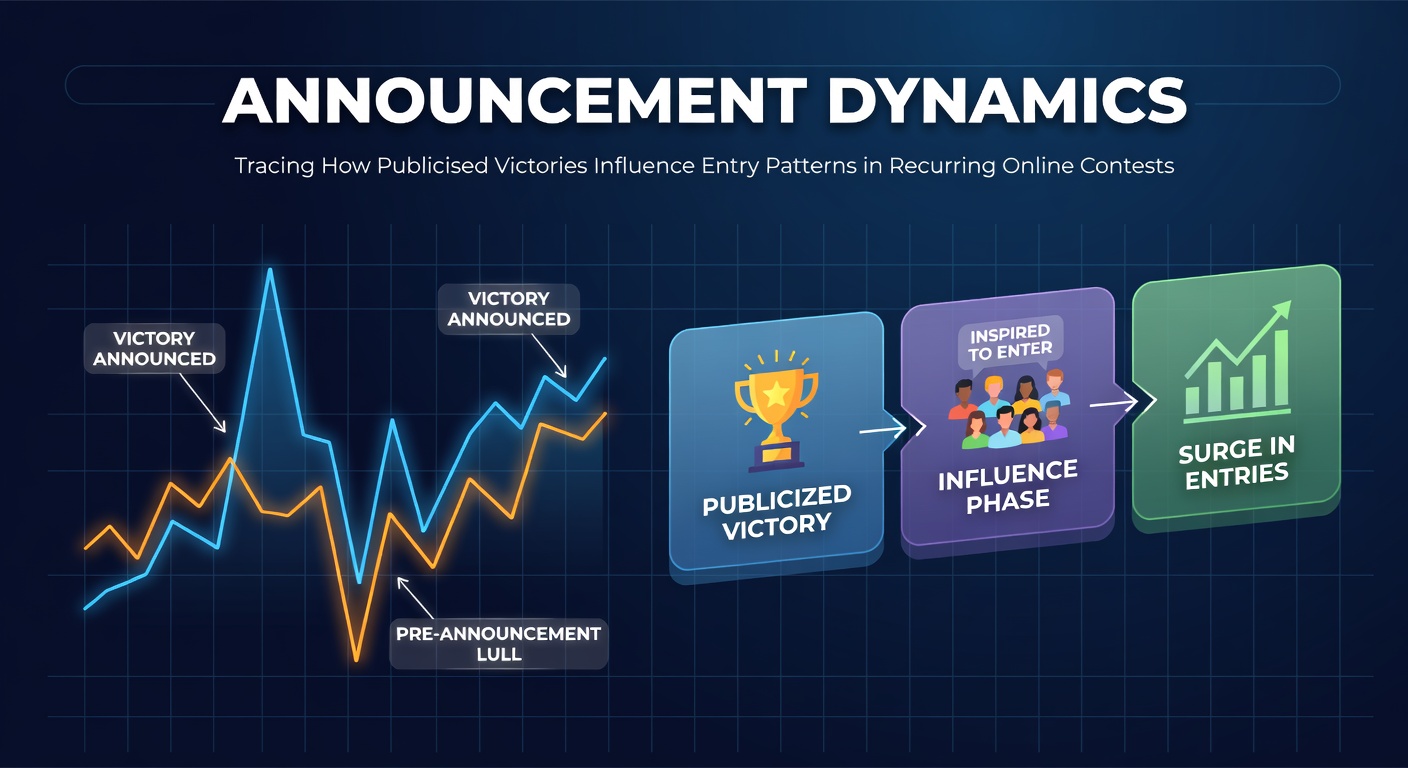
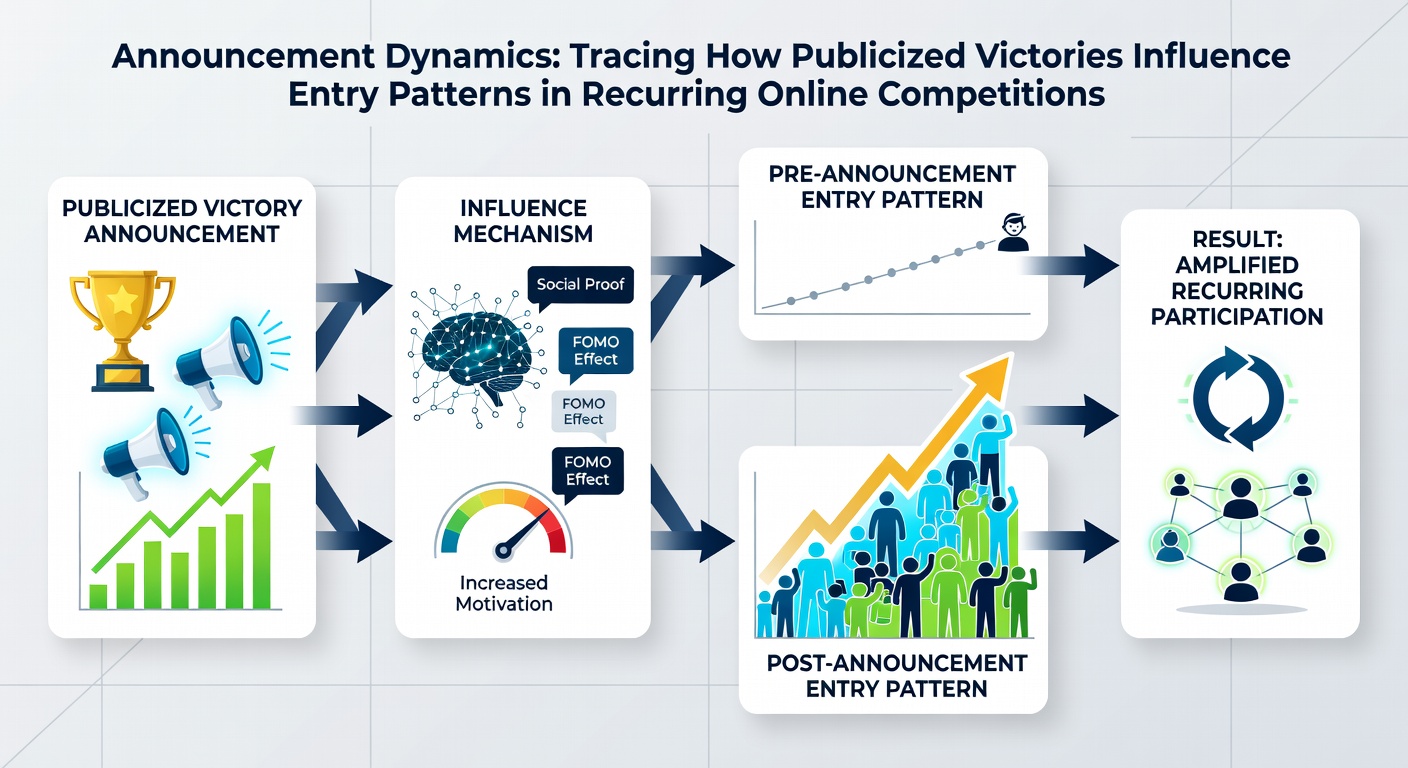
Publicized victories in recurring online contests create measurable shifts in participant behavior, with entry volumes often rising sharply once winners receive public recognition through emails, social posts, or platform dashboards. Researchers tracking these patterns note that announcements serve as social proof, prompting renewed interest among previous entrants while drawing fresh participants who might otherwise overlook the contest cycle. Data from multiple platforms shows that contests publishing winner lists weekly experience entry increases of 25 to 40 percent in the days immediately following each release, particularly when the prizes involve cash or high-value merchandise.
How Announcements Shape Participant Decisions
Contest operators release winner information through structured channels that include timestamped posts, archived galleries, and automated notifications, each designed to maintain transparency while highlighting success stories. Observers tracking entry logs across daily, weekly, and monthly formats find that visible victories reduce perceived barriers for new users, who interpret recent wins as evidence that the system functions fairly and delivers prizes on schedule. Those monitoring recurring events note that the timing of announcements matters: releases occurring on weekday mornings generate steadier follow-up traffic than weekend drops, because participants incorporate the information into their regular online routines more readily.
Patterns emerge when analysts compare entry curves before and after announcements across identical contest series. One recurring giveaway tracked over eighteen months revealed consistent spikes within forty-eight hours of each winner reveal, with the effect compounding when the same individual won multiple rounds and the platform emphasized that repeat success in its messaging. Such repetition appears to signal accessibility rather than exclusivity, encouraging broader participation instead of discouraging it.
Data Patterns Across Platforms and Regions
Figures compiled by industry analysts indicate that contests operating in North America and Europe display similar announcement-driven surges, though the magnitude varies with prize value and announcement format. Platforms using short video clips of winners accepting prizes see stronger secondary engagement than those relying solely on text lists, because visual confirmation adds credibility that static announcements sometimes lack. In May 2026 several major contest sites reported record entry days following coordinated winner reveals tied to spring promotional campaigns, suggesting seasonal alignment can amplify the baseline announcement effect.
Academic studies examining aggregated contest archives show that participants who enter after seeing a publicized victory tend to submit multiple entries across subsequent rounds rather than treating the contest as a one-time event. This behavior creates sustained volume growth, particularly in contests that allow daily entries and maintain rolling winner selections. Regulatory bodies such as the Canadian Competition Bureau have documented how clear winner disclosure supports compliance while indirectly influencing participation rates through increased trust signals.
Factors That Moderate the Announcement Effect
Not every publicized victory produces identical results. Prize type, announcement frequency, and participant demographics interact to determine the scale of entry changes. High-value recurring prizes such as travel packages or electronics generate larger post-announcement lifts than smaller merchandise items, while contests that announce winners too frequently risk diluting the impact through oversaturation. Researchers comparing data sets from 2024 through 2026 found that audiences aged 25 to 44 respond most strongly to social-media-style winner posts, whereas older demographics show steadier but smaller increases when announcements appear in email newsletters.
Geographic restrictions also play a role. Contests limited to specific states or provinces experience sharper localized spikes when winners from those areas receive prominent placement in announcements. This localization effect encourages participants within the eligible region to treat the contest as more attainable, leading to higher repeat entry rates compared with broadly national or international formats.
Platform Strategies and Long-Term Trends
Operators increasingly time their announcement schedules to coincide with low-traffic periods, using publicized victories to restart engagement cycles. Some platforms now integrate winner stories into automated reminder emails, linking past success directly to current entry opportunities. This approach capitalizes on the documented tendency for new entrants to cluster around visible proof of prior payouts.
Longitudinal data collected through 2026 suggests the announcement effect remains stable even as contest volumes grow, provided operators maintain consistent disclosure practices. When platforms experiment with delayed announcements or reduced visibility, entry growth flattens noticeably until the original cadence resumes. These observations come from aggregated platform metrics rather than isolated case reports, giving them broader applicability across recurring contest formats.
Conclusion
Publicized victories function as recurring catalysts within online contest ecosystems, driving predictable upticks in entry volume while shaping long-term participation rhythms. The mechanisms involve social proof, timing alignment, and demographic responsiveness, all of which combine to create measurable patterns across platforms and regions. As contest operators refine announcement strategies through 2026 and beyond, the relationship between publicized outcomes and subsequent entry behavior continues to offer clear indicators for participation forecasting and compliance planning.